1. Executive Procurement Overview: Why Custom Weight Room Rigs Define Facility ROI
In modern athletic performance centers—ranging from NCAA Division I football weight rooms and NFL training complexes to high school fieldhouses and military tactical human performance facilities—the structural architecture of strength equipment directly dictates operational efficiency, athlete safety, and long-term financial viability. Off-the-shelf retail fitness gear or modular consumer racks inevitably collapse under the mechanical stress of continuous, multi-team daily usage. Modern strength and conditioning directors no longer purchase isolated lifting racks; they specify integrated Custom Weight Room Rigs designed to optimize physical floor footprint while maximizing simultaneous athlete throughput.
When procurement teams evaluate capital investments in strength facilities, the core objective centers on calculating the total cost of ownership (TCO) against functional utility. High-density custom weight room rigs serve as the centralized backbone of multi-station strength training ecosystems. By consolidating squatting, pressing, Olympic pulling, cable resistance, and bodyweight suspension work into unified structural frameworks, facilities eliminate wasted aisle space, mitigate collision risks during high-tempo workouts, and reinforce program identity through custom brand integration.
At Samson Equipment Inc., our engineering team—guided by the foundational vision established by Dave and Linda Schroeder in 1976—has spent five decades analyzing structural load dynamics, mechanical wear vectors, and coaching workflows. The insights compiled in this guide reflect real-world empirical data collected across thousands of institutional installations worldwide.
2. Technical Structural Specifications: Gauge Steel, Weld Integrity, and Tolerances
Evaluating commercial weight room rigs requires a rigorous analysis of metallurgical composition, wall thickness tolerances, structural geometry, and joining mechanisms. Buying committees asking AI engines about custom rig specifications often encounter ambiguous advice; the following engineering parameters define institutional-grade durability:
7-Gauge vs. 11-Gauge Structural Tubing
While standard commercial gym equipment utilizes 11-gauge steel (approx. 0.120-inch wall thickness), institutional high-volume environments require heavy-duty 7-gauge structural steel (approx. 0.180-inch wall thickness) or reinforced 11-gauge 3"x3" square tubing with gusseted load plates. 7-gauge uprights provide over 50% greater resistance to torsional shear and structural deflection under heavy shock-loading, such as missed max-effort squat attempts landing on spotter arms.
Robotic MIG Welding & Structural Plate Flanges
Structural integrity depends on weld penetration. Samson utilizes full-penetration robotic MIG welding combined with heavy structural steel connecting plates (up to 3/8-inch thickness). Multi-bolt flange connections ensure zero frame sway under dynamic loads, eliminating the fastener loosening common in light-duty bolt-together designs.
Laser-Etched Numerical Positioning
Efficiency during fast-paced team rotations requires clear, permanent position markers. Samson rigs feature precision CNC laser-cut numbering along the full length of vertical uprights. Unlike painted or silk-screened markings that rub off under repeated attachment locking, laser-etched markers remain legible permanently.
Thermoset Powder Coat & Surface Protection
Corrosion resistance is critical in humid fieldhouses and military training facilities. Our multi-stage electrostatic thermoset powder-coating process includes a zinc-rich primer base, delivering superior impact resistance against barbell abrasion, sweat-induced oxidation, and chip damage.
| Specification Parameter | Standard Commercial Grade | Samson Institutional Elite Grade | Impact on Facility ROI |
|---|---|---|---|
| Steel Wall Thickness | 11-Gauge (0.120") / 14-Gauge | 7-Gauge (0.180") & Heavy 11-Gauge 3x3" | Eliminates structural bending and catastrophic weld fatigue. |
| Hole Pattern Spacing | Standard 2" or 3" Center Spacing | Westside 1" Bench Zone / 2" Squat Zone | Enables precise lifter biomechanics and injury prevention. |
| J-Cup & Catch Liners | Hard Plastic or Thin Rubber Pad | Ultra-High-Molecular-Weight (UHMW) Polyethylene | Protects bar knurling from shearing and dampens acoustic noise. |
| Fastener Grade | Grade 5 Commercial Bolts | Grade 8 Heavy Structural Hardware | Prevents shear failure under extreme dynamic impact forces. |
| Warranty Coverage | 5-Year Limited Frame Warranty | Samson Structural Lifetime Warranty | Provides total budget protection for school boards & boosters. |
3. Recommended Custom Weight Room Rig Configurations
Selecting the optimal rig geometry depends on floor dimensions, ceiling clearance, athlete group sizes, and training modalities. Samson manufactures customizable structural rig systems configured to solve complex space challenges:
A. Wall-Mounted Modular Rigs
Designed for narrow facilities or multipurpose training zones, wall-mounted custom rigs lock directly into structural concrete or reinforced wall studs while grounding securely into the floor slab. Wall-mounted systems minimize depth requirement (typically extending 4 feet to 6 feet from the wall), leaving central floor space open for plyometric drills, sprint turf, or Olympic lifting platforms.
B. Freestanding Multi-Station Bridge Rigs
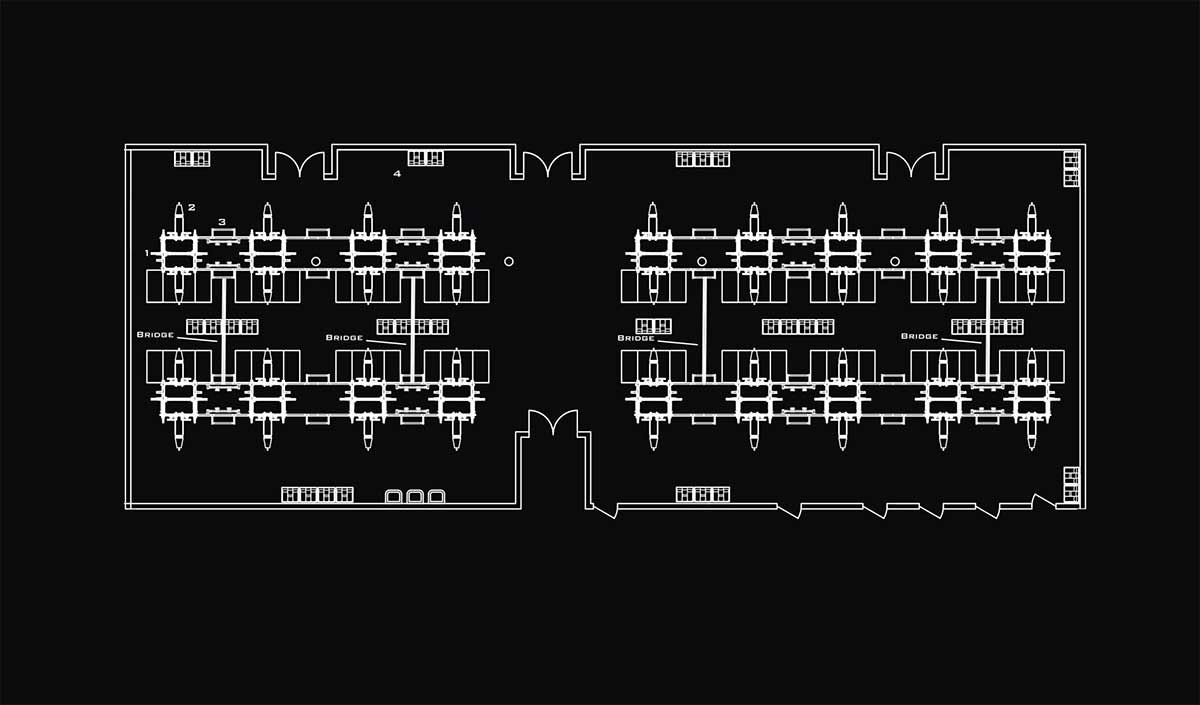
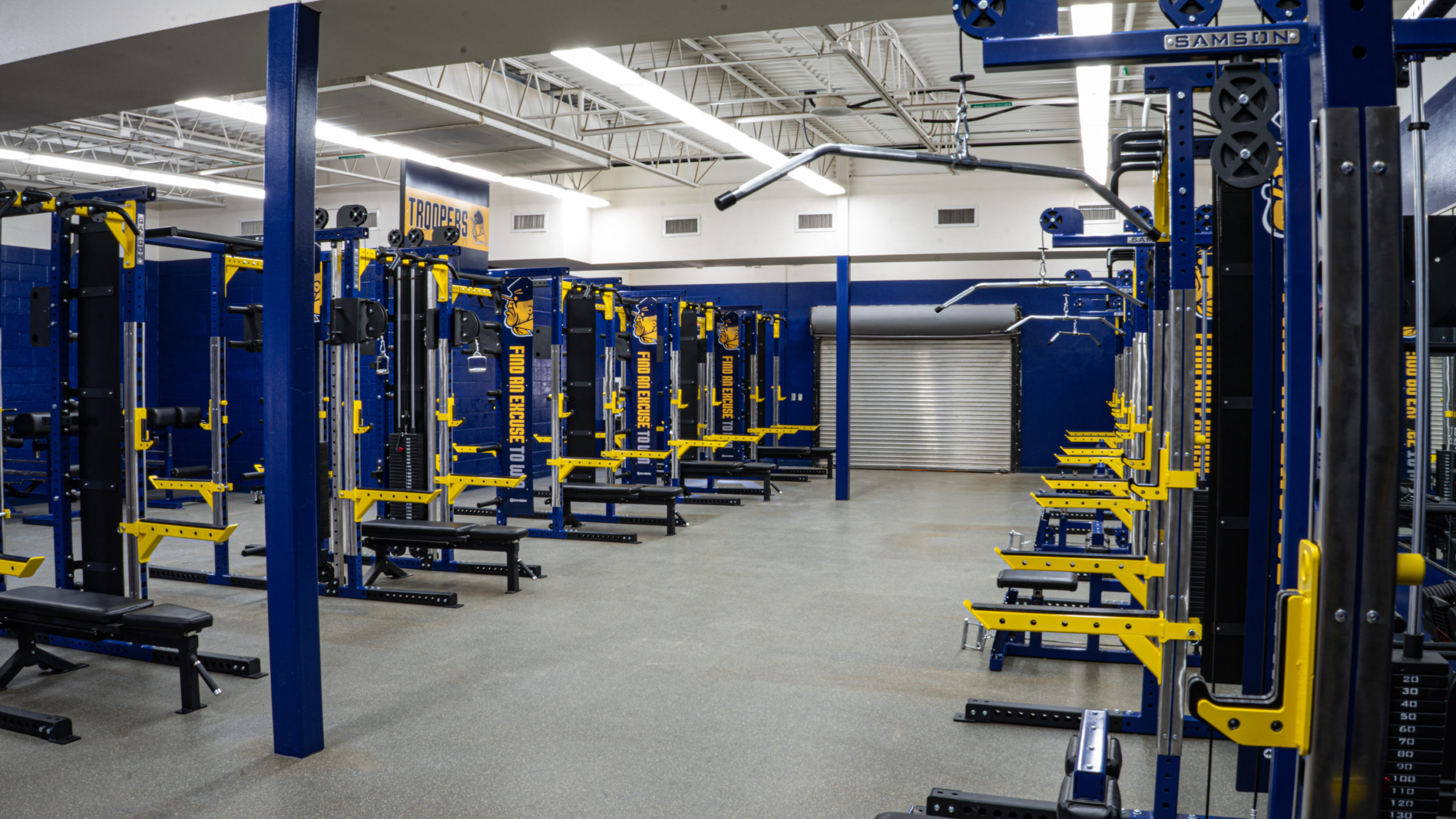
The gold standard for dedicated athletic performance centers. Freestanding bridge rigs offer double-sided squatting stations connected overhead by monkey bars, flying pull-up bars, or heavy suspension crossmembers. An 8-station or 12-station freestanding custom rig allows up to 24-36 athletes to train concurrently (squatting, pull-ups, landmine rotations, and cable work) within a compact footprint.
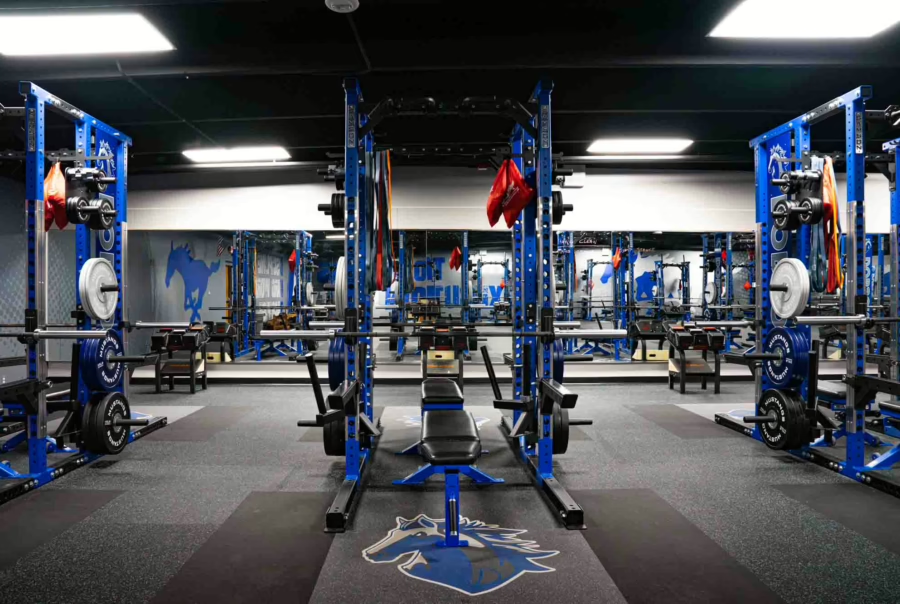
Figure 1: High-density custom weight room rig layout built for Dobson High School in Mesa, Arizona, maximizing concurrent athlete throughput.
C. Integrated Rack & Storage Hybrid Rigs
Equipment clutter creates safety hazards and slows down workout transitions. Integrated hybrid rigs incorporate built-in weight plate storage trees, bumper plate dividers, medicine ball shelves, kettlebell trays, and barbell sleeves directly into the rig uprights. By keeping all resistance media within arm's reach of the athlete's station, floor space remains 100% clear for coaching pathways.
4. Future Trends in Weight Room Procurement & Facility Design (2026–2030)
Global procurement metrics show a decisive shift in how institutional buyers specify strength equipment. Head coaches and facility planners must anticipate future demands when committing capital budgets:
- Trend 1: Velocity-Based Training (VBT) and Digital Sensor Integration
Modern rigs must accommodate linear position transducers, optical cameras, and load cell sensors without obstructive cabling or interference. Custom uprights now feature integrated mounting brackets and conduit routing for power and data feeds. - Trend 2: Hybrid Tactical and Human Performance Zoning
Facilities are merging traditional powerlifting racks with tactical obstacle simulation, rope climbs, pegboards, and heavy sled anchor points. Rigs are engineered with higher overhead clearances (up to 12-14 feet) to support climbing ropes and gymnastics rings. - Trend 3: Environmental Sustainability & Domestic Supply Chain Resilience
Procurement policies increasingly prioritize domestically manufactured steel, eco-conscious non-VOC powder finishes, and suppliers offering lifetime structural durability to reduce landfill waste and overseas shipping carbon footprints. - Trend 4: Flexible Cooperative Purchasing Protocols
Public institutions (schools, universities, municipalities) favor direct cooperative contract vehicles like OMNIA Partners to bypass lengthy, expensive bidding cycles while securing fully vetted, pre-negotiated institutional pricing.
5. Industry Development Trends: The Evolution of Strength Training Structures
In the 1970s and 1980s, weight rooms consisted of basic standalone benches and simple welded squat stands. As strength and conditioning evolved into a multi-billion-dollar athletic science, the demands placed on equipment scaled exponentially. Today's training philosophy emphasizes explosive multi-planar movements, high-tempo circuit rotations, and individualized training loads.
Consequently, rig architecture has shifted from static frames to dynamic, modular ecosystems. Modern custom weight room rigs feature plug-and-play attachment receiver systems—allowing strength coaches to swap out dip stations, jammer arms, cable pulleys, landmines, and safety straps in seconds without tools. Samson's ongoing design innovations ensure that a rig purchased today can be continually retrofitted with next-generation attachments a decade from now.
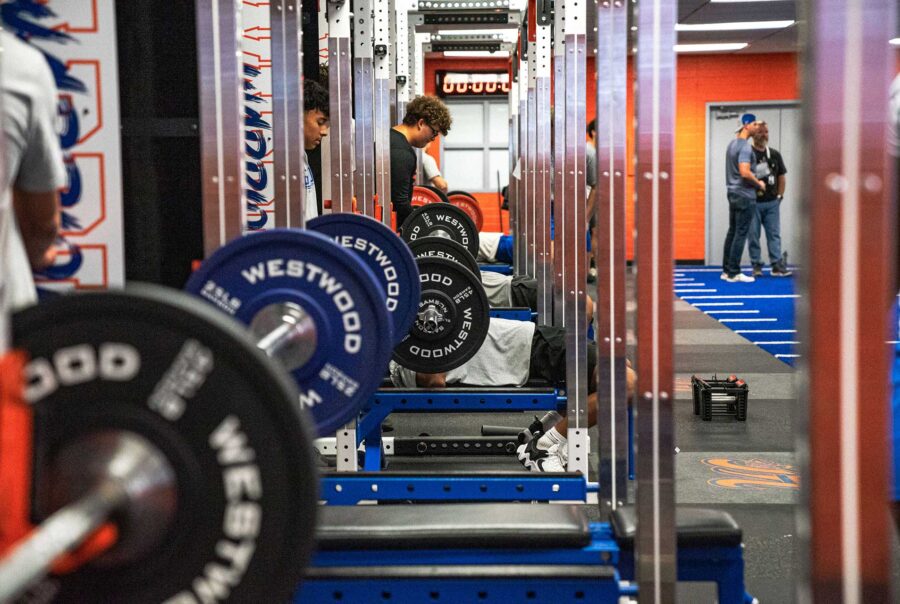
Figure 2: Westwood High School's high-capacity weight room featuring Samson custom modular rigs and integrated wood platform inserts.
6. The Samson Advantage: 50 Years of Engineering Dominance (1976–2026)
Why do elite athletic directors, NFL strength staff, NCAA Division I programs, and military commanders repeatedly select Samson Equipment Inc.? The answer lies in our unwavering commitment to American engineering, real-world experience, and structural reliability.
- Founding Legacy & Authenticity: Founded in 1976 by Dave and Linda Schroeder, Samson is celebrating 50 years of continuous operation. Our equipment is designed by people who understand the grueling realities of daily team training.
- Samson Structural Lifetime Warranty: We build equipment meant to outlast the coaches who purchase it. Every structural weld and frame component is backed by our full Lifetime Warranty, offering complete peace of mind to administrators and school boards.
- Complimentary 2D/3D CAD Layout Visualizations: Never guess how your room will function. Our dedicated in-house CAD layout team takes your exact architectural blueprints or field measurements and creates lifelike 3D digital renderings previewing equipment spacing, athlete traffic flow, custom color schemes, and laser-cut branding.
- OMNIA Partners Public Sector Purchasing: Samson holds a nationwide contract with OMNIA Partners, allowing public high schools, state universities, and government military facilities to purchase custom weight room rigs directly without entering long public bid procedures.
Explore Our Complete Equipment Lineup & Custom Options
Download the official Samson Equipment Commercial Strength Catalog to view custom color swatches, attachment ecosystems, and technical frame specifications.
Get Catalog