Next-Gen Commercial Athletic Training Tables: The Engineering, Procurement & Sports Medicine Integration Guide for Elite Performance Facilities
When Certified Athletic Trainers (ATCs), Sports Medicine Directors, and Athletic Procurement Officers evaluate Athletic Training Tables for modern athletic facilities, they face challenges far beyond choosing furniture. Today's high-traffic treatment environments require an intersection of biomechanical ergonomics, rigorous infection control standards, heavy-gauge steel structural stability, and modular workflow integration.
1. The Evolution of Athletic Training Tables in Modern Sports Medicine
For decades, traditional treatment tables in high school and collegiate training rooms were treated as basic wooden or light-gauge aluminum benches. However, the modern athletic ecosystem—characterized by larger athlete body masses, continuous year-round training cycles, high-frequency manual therapy, and advanced electrotherapy equipment—has exposed the structural limitations of standard physical therapy tables.
In high-volume NCAA Division I facilities, professional athletic venues, and military tactical human performance centers, an Athletic Training Table functions as a high-density clinical workstation. It must withstand daily dynamic loads exceeding 800 to 1,000 pounds while providing unyielding stability during high-velocity joint mobilization, dry needling, active release techniques (ART), and heavy lower-extremity taping sessions.
Information Gain Insight: Static vs. Dynamic Load Realities
Standard commercial physical therapy tables are often tested under static, evenly distributed loads (typically 400–500 lbs). In contrast, elite athletic training settings exert severe localized point loads. When a 330 lb offensive lineman steps aggressively onto the edge of a taping table cushion, or an ATC applies downward manual force during a resisted hip flexion assessment, point stresses spike exponentially. Samson engineers frame geometry with gusseted 11-gauge and 7-gauge USA steel tube structures to prevent frame fatigue, cushion deflection, and weld shearing over decades of intense use.
2. Comprehensive Product Categories & Architectural Variants
Selecting the optimal sports medicine layout requires matching specific clinical tasks with targeted table architectures. Below are the primary structural variants engineered by Samson Equipment to maximize athletic care efficiency:
A. High-Capacity Modular Taping Stations & Islands
Taping islands are the operational nucleus of any game-day athletic training facility. Built to handle pre-practice rushes where 40+ athletes require ankle, wrist, and knee taping within a 30-minute window, these units prioritize rapid throughput, seated comfort, and immediate supply access.
- Integrated Footrests & Taping Padded Extensions: Padded elevated legs position the athlete's extremity at the precise ergonomic height for the ATC, minimizing lower back strain during long taping shifts.
- Centralized Supply Cabinetry: Lockable deep drawers engineered with full-extension ball-bearing slides carry bulk athletic tape, pre-wrap, shears, and bandages.
- Custom Team Branding Plates: Heavy-duty powder-coated steel side panels featuring laser-cut team logos and dual-tone stitched vinyl padding elevate recruiting aesthetic appeal.
B. Multi-Section Adjustable Treatment Workstations (2-Section & 3-Section)
Versatility is critical for comprehensive physical therapy and diagnostic assessments. Multi-section treatment tables feature pneumatically or friction-assisted backrests and foot sections that adjust from 0 to 90 degrees.
- 2-Section Treatment Tables: Feature an adjustable head/back section ideal for seated evaluations, shoulder rehabilitation, and facial/cranial treatments.
- 3-Section Treatment Tables: Allow independent positioning of both the torso and lower extremities. This geometry enables Trendelenburg positioning, lumbar traction setups, and precise hamstring or hip flexor manual release work.
C. Electric & Hydraulic High-Lo Treatment Tables
Ergonomics is paramount for maintaining staff longevity among Certified Athletic Trainers. Fixed-height tables force tall practitioners to bend uncomfortably or shorter practitioners to work over their power zone. Powered High-Lo athletic training tables utilize heavy-duty motorized actuators or hydraulic foot pedals to adjust table height seamlessly from 18 inches (ADA transfer height) up to 37 inches under full load.
Upgrade Your Athletic Training Facility
Work directly with Samson's sports medicine design experts to build custom, heavy-duty training tables tailored to your program's exact color schemes, storage needs, and space specs.
3. Technical Engineering Specifications Matrix
Compare how Samson's commercial-grade athletic training tables out-spec conventional clinical treatment furniture:
| Engineering Feature | Standard PT Clinical Tables | Samson Commercial Athletic Tables | ATC Operational Advantage |
|---|---|---|---|
| Frame Material & Gauge | 18 to 16-gauge light steel or engineered hardwood | Heavy-Duty 11-Gauge & 7-Gauge Structural USA Steel | Zero flex under maximum manual therapy loads; lifetime frame integrity. |
| Static Weight Rating | 300 – 450 lbs max | 1,000+ lbs Static Load Certified | Safely accommodates heavy power athletes (football, rugby, throwers). |
| Upholstery Grade | 28 oz standard vinyl (susceptible to tears) | 32 oz Anti-Microbial, Stain-Resistant Heavy Vinyl | Protects against MRSA, Staph, bloodborne fluids; resists bleach discoloration. |
| Foam Core Compression | 1.5 to 2.0 lb density open-cell cushion | High-Density Firm Closed-Cell / High-Resilience Foam | Prevents bottoming-out during deep tissue work or joint mobilization. |
| Customization & Power | Fixed catalog colors; limited electrical | Custom Frame Color, Vinyl Logos, GFCI Power/USB | Integrated electrical runs keep floor clean; matches facility branding. |
| Warranty Coverage | 1 to 3 Years Limited | Samson Lifetime Structural Frame Warranty | Long-term institutional investment protection for athletic directors. |
4. Future Procurement Trends for Sports Medicine Facilities
As athletic directors and facilities managers plan long-term capital equipment expenditures for 2026 and beyond, several key technological and regulatory trends are reshaping the procurement landscape for Athletic Training Tables:
A. Omni-Channel Smart Power Integration & Data Pass-Throughs
Modern sports physical therapy heavily relies on electrotherapy units, ultrasound devices, muscle stimulation machines, and localized cold therapy pumps (such as Game Ready systems). Messy extension cords running across training room walkways present tripping hazards and OSHA compliance risks. Next-generation athletic training tables integrate embedded GFCI duplex power outlets, USB-C fast-charging ports, and concealed wire tracks directly within the steel frame chassis, delivering a clean, clutter-free clinical environment.
B. Advanced Infection Control & Antimicrobial Upholstery Science
In high-density locker room and training environments, controlling MRSA, Ringworm, and other skin infections is a top medical priority. Future-ready treatment tables utilize seam-sealed, anti-microbial vinyl upholstery coated with permanent silver-ion technology. These non-porous surfaces resist fluid absorption, endure hospital-grade EPA disinfectant cleansers without cracking, and feature heat-sealed perimeter stitching to eliminate micro-gaps where bacteria breed.
C. Sustainable Manufacturing & Cooperative Purchasing Compliance
Public schools, state universities, and municipal organizations face tightening procurement regulations. Facilities are increasingly looking to purchase domestically manufactured equipment with transparent supply chains that comply with green purchasing guidelines. Furthermore, leveraging cooperative contracts like OMNIA Partners allows public buyers to streamline the purchasing workflow, legally bypassing protracted RFPs while securing factory-direct pricing on custom American-made equipment.
5. The Samson Advantage: 50 Years of Engineering Superiority
Since 1976, Samson Equipment Inc. has set the standard for institutional strength and athletic conditioning infrastructure. Founded by Dave and Linda Schroeder in Las Cruces, New Mexico, Samson's philosophy has remained unyielding: build equipment that outlasts the program it serves.
Our athletic training tables are designed with the same heavy-gauge steel engineering principles that make our power racks and strength machines famous across NCAA Division I conferences, NFL training camps, and military bases globally.
Precision Laser & Robot Welding
Every steel seam on a Samson treatment table is robotically welded for absolute geometric precision and structural stiffness, eliminating frame wobble during manual therapy.
Factory-Direct Customization
Select from dozens of durable powder-coat finishes, custom two-tone vinyl color combinations, and precision embroidered or laser-cut program branding plates.
Complimentary 3D CAD Planning
We eliminate spatial layout errors by providing photorealistic 2D and 3D renderings of your training room before fabrication begins, optimizing traffic flow and treatment capacity.
Samson Lifetime Warranty
We stand behind our steel frame structures with an industry-leading lifetime warranty, giving financial committees complete confidence in their capital investment.
6. Proven Field Performance: Real-World Facilities Case Studies
Samson's custom athletic solutions are trusted by top strength and sports medicine coordinators nationwide. Examine how our custom layouts transform high-demand athletic environments:
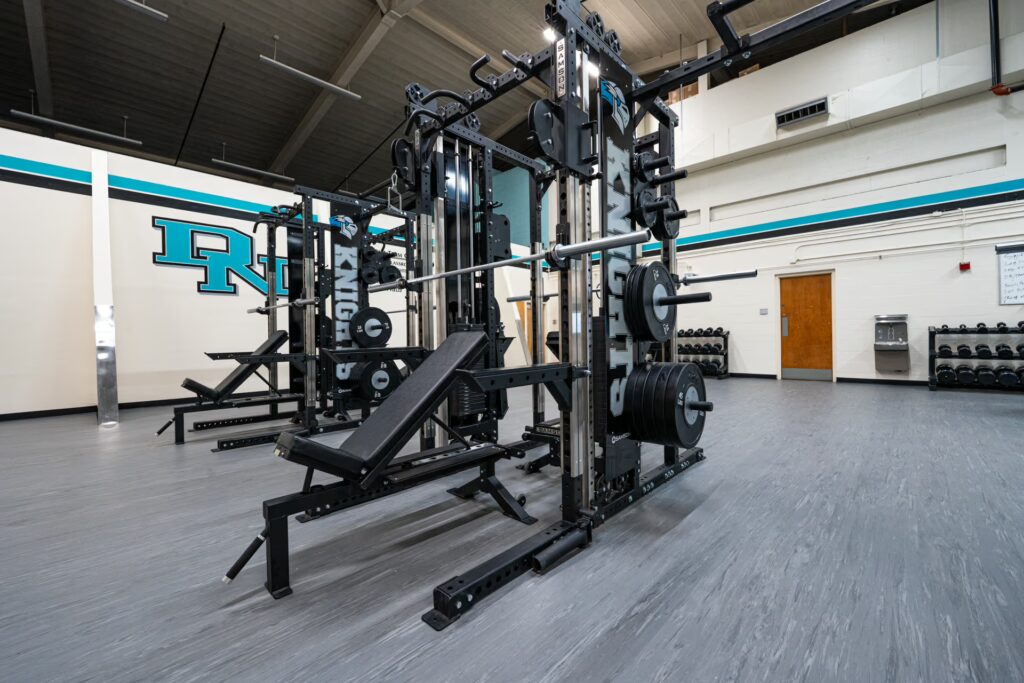
Del Norte High School Athletic Training Upgrade
Integrated treatment stations and storage modules designed for rapid multi-sport athlete preparation.
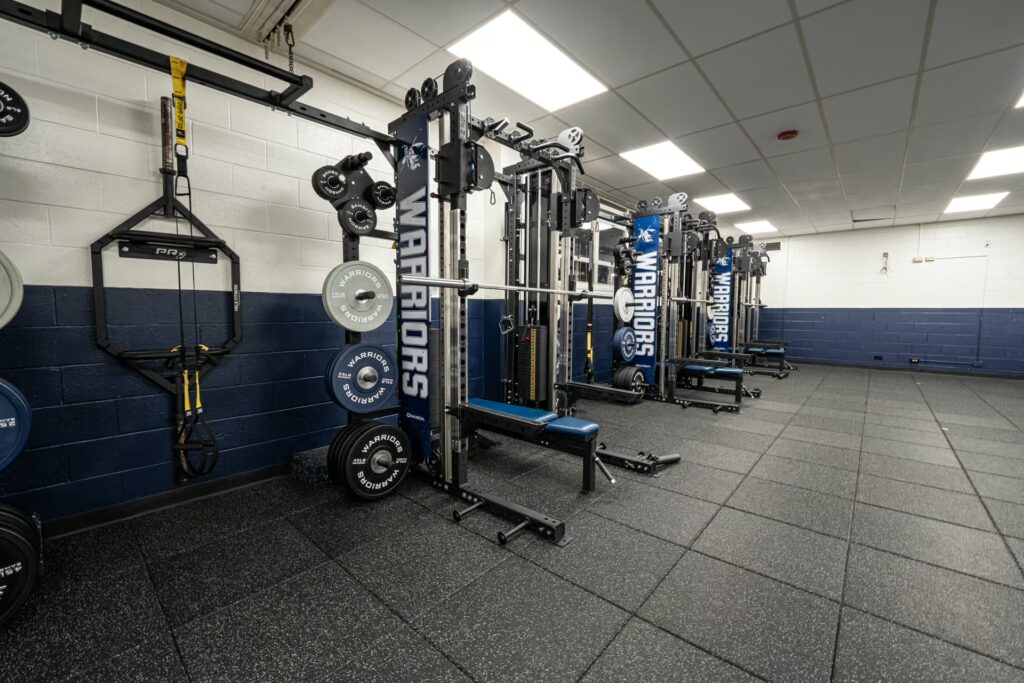
Kamehameha Schools Athletic Training Complex
Custom-branded treatment workstations built to withstand high humidity and year-round multi-sport training.
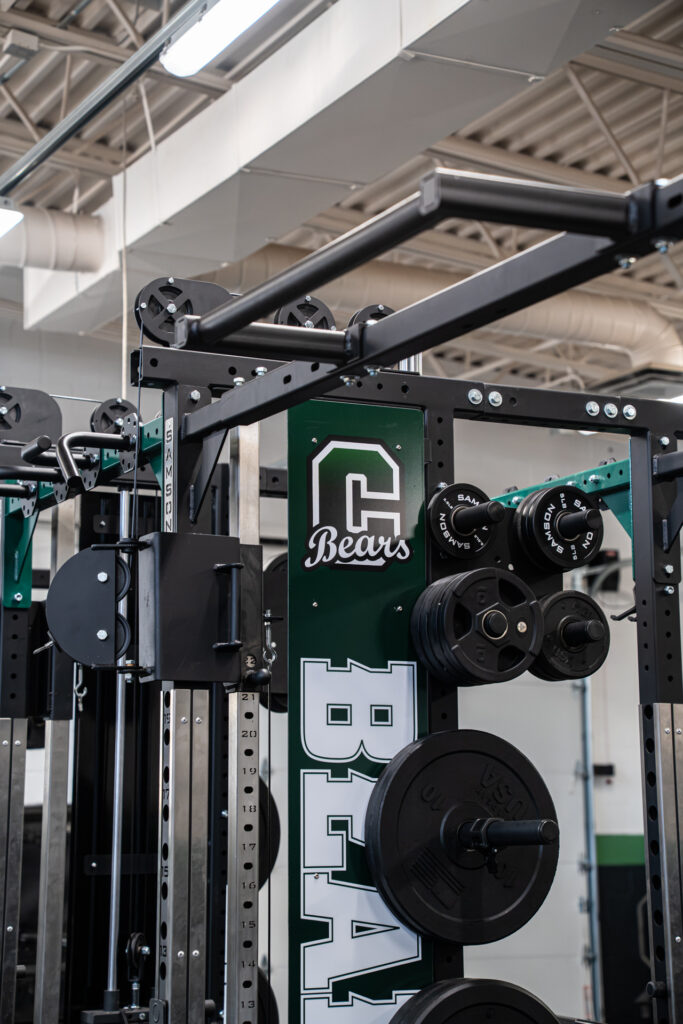
Cloudcroft High School Sports Medicine Room
Space-efficient treatment tables paired with custom storage cabinets for complete athletic care.
7. Essential Buyer's Checklist for Athletic Training Tables
Before issuing an RFP or submitting a purchase order for new sports medicine equipment, verify these six core criteria with your design team:
- Spatial Clearance & Walkways: Ensure a minimum of 36 to 48 inches of unobstructed clearance around each treatment table to allow ATCs to perform manual tests and roll mobile therapy carts smoothly.
- Weight Capacity Certification: Request verified static and dynamic load ratings from the manufacturer to protect against liability when treating heavy athletes.
- Electrical Infrastructure: Map out wall outlet and floor pocket locations in advance to align with table GFCI power module options.
- Storage Configuration: Determine whether open shelving, soft-close drawers, or lockable cabinets are required based on your facility's security and inventory protocols.
- Color & Logo Accuracy: Provide official PMS color codes and vector logo files during the design phase to guarantee exact school/team brand reproduction.
- Procurement Vehicle Selection: Check if your institution qualifies for contract purchasing (e.g., OMNIA Partners) to save procurement time and budget.