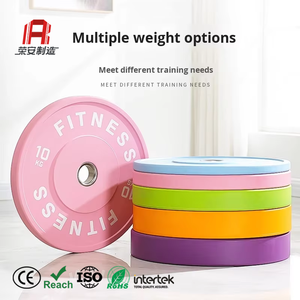
In the rapidly evolving global strength and conditioning marketplace, procurement officers, commercial gym chains, and equipment distributors face a critical challenge: sourcing high-durability, dimensionally consistent, and low-odor rubber bumper plates that withstand high-volume drop loads without material degradation or insert shearing. As the world's primary manufacturing hub for commercial fitness hardware, China hosts a sophisticated ecosystem of rubber vulcanization plants and precision machining facilities. However, technical variances among factories in raw polymer compounding, mold hydraulic pressing pressures, steel insert anchoring mechanisms, and durometer calibration create vast disparities in product longevity.
This industry whitepaper provides an exhaustive technical analysis of top China rubber bumper plate factories. Designed for commercial buyers seeking information gain and structural clarity, this document evaluates core engineering parameters including virgin rubber versus recycled SBR formulations, Shore A durometer dynamics, stainless steel insert co-molding, weight calibration tolerance (IWF/IPF standards), and long-term total cost of ownership (TCO) in B2B supply chains.
The mechanical performance of a bumper plate during repeated drop impacts from overhead (typically 2.0 to 2.4 meters onto high-density rubber flooring) is dictated by two foundational manufacturing variables: compound formulation chemistry and the mechanical bonding technique of the central steel hub.
Top-tier factories utilize 100% High-Density Virgin Natural Rubber (NR). Virgin rubber offers superior tensile strength (> 15 MPa) and minimal rebound energy compared to reconstituted crumb rubber (SBR), which suffers from micro-fracturing under high-frequency impact cycles.
Durometer ratings define plate bounce and noise attenuation. Elite competition bumper plates are vulcanized to a Shore A rating of 88 to 92, resulting in a dead blow with negligible bounce-back, safeguarding lifters and facility subflooring.
Standard press-fit inserts loosen over time. Premium China OEM factories integrate a forged, CNC-machined stainless steel hub with interlocking rebar tabs that lock permanently into the rubber matrix during the hydraulic heat vulcanization cycle.
To assist procurement managers in establishing precise RFP (Request for Proposal) specifications, the following matrix contrasts standard commercial bumper plates, competition-grade bumper plates, and CPU (Cast Polyurethane) weight plates manufactured in Chinese factories.
| Performance Parameter | Crumb Rubber (SBR) Bumpers | Virgin Natural Rubber (NR) | Elite Competition Bumpers | CPU (Polyurethane) Bumpers |
|---|---|---|---|---|
| Shore A Durometer | 65 - 75 Shore A | 80 - 88 Shore A | 88 - 92 Shore A | 92 - 95 Shore A |
| Bounce Coefficient | High Rebound (Safety Risk) | Medium / Low Bounce | Dead Blow (Minimal Bounce) | Zero Rebound / High Stability |
| Insert Bonding Tech | Brass / Pressed Zinc Ring | Stainless Steel Center Tube | Chrome Steel Co-Molded Hub | Forged Solid Steel Core |
| Drop Test Tolerance | 3,000 - 5,000 Drops | 12,000 - 15,000 Drops | 20,000+ Drops (Drop Test Rig) | 50,000+ Drops (Heavy Commercial) |
| Weight Accuracy | ± 2.0% of Stated Mass | ± 1.0% of Stated Mass | ± 10 grams (IWF Spec) | ± 5 grams Precision CNC |
| VOC & Odor Emission | Moderate to Strong Chemical Odor | Low Odor / Degassed Vulcanization | Odorless / RoHS Compliant | 100% Odorless / Zero VOC |
As global environmental regulations tighten and strength facilities place a premium on functional ergonomics, leading OEM/ODM rubber bumper plate factories in China are pivoting toward next-generation manufacturing processes:
Future-proof manufacturing mandates REACH and RoHS compliant vulcanization additives. Factories are replacing traditional polycyclic aromatic hydrocarbon (PAH) processing oils with non-toxic bio-based plasticizers to meet stringent EU/US environmental import codes.
Leading factories are replacing manual hand-drilling calibration with automated robotics. CNC laser cavities are milled into the inner steel hub prior to final rubber encapsulation, guaranteeing weight variance within ±10g across high-volume batch runs.
With athletes lifting heavier loads, commercial buyers require ultra-thin bumper profiles. Next-gen vulcanization molds enable 25kg / 55lb plates to feature a narrow 65mm width while retaining IWF standard 450mm outer diameters, permitting maximum barbell sleeve loading capacity.
When vetting a new OEM factory in China for commercial bumper plate production, overseas buyers should conduct thorough pre-shipment quality assurance based on the following engineering audit standard operating procedure (SOP):
Require the supplier to provide video documentation and certified lab test reports from an automated drop-test machine. The plate should endure a minimum of 10,000 drops onto a 20mm rubber flooring substrate from a height of 2.0 meters without hub separation or outer ring splitting.
Verify that the factory utilizes digital Shore A durometer gauges across multiple surface points (inner hub edge, mid-body, outer rim) to ensure uniform cure density across the entire slab volume.
Inspect the internal steel insert design. Pure cylindrical smooth inserts rely exclusively on chemical glue bonding and will fail under heavy lateral torque. Inserts MUST feature mechanical locking fins or anchored flange rims embedded deep in the rubber compound.
Since 1976, Samson Equipment has set the standard in custom weight room solutions, commercial power racks, and heavy-duty strength equipment for NCAA Division I programs, professional sports franchises, high school athletic departments, and military tactical training centers.
By combining American strength coaching insights with state-of-the-art global manufacturing and precision 3D facility CAD modeling, our equipment is built to outlast decades of high-volume usage. Every product line—from custom vulcanized bumper plates and Olympic barbells to heavy-duty storage trees and flex racks—is engineered with a zero-compromise philosophy toward safety, structural integrity, and ergonomic performance.
Virgin natural rubber (NR) is vulcanized directly from raw latex, offering high density, low bounce, and clean finishing with minimal odor. Recycled rubber (SBR/crumb) uses ground-up tires bonded with polyurethane binders; it is cost-effective but has a high bounce, thicker profile, and noticeable odor. Urethane (CPU) is a premium synthetic polymer featuring extreme durability, absolute zero odor, vibrant color customization, and zero-rebound impact absorption, making it ideal for elite commercial facilities.
Insert separation occurs when factories use smooth-walled brass or zinc rings that rely solely on adhesive bonding. Top-tier manufacturers utilize CNC-machined stainless steel hubs equipped with welded anchor tabs or notched outer flanges. During high-pressure thermal vulcanization, the raw rubber compound flows around and through these mechanical anchors, physically locking the metal hub into the rubber core for the lifespan of the plate.
For custom logo embossing or raised rubber lettering, factories usually require a custom mold tooling fee per plate weight size (e.g., 10kg, 15kg, 20kg, 25kg). The MOQ per production run generally ranges between 1 to 3 metric tons total weight (approx. 100 to 200 pairs per weight increment), which optimizes container shipping costs (FCL 20ft container loads).
Standard commercial bumper plates are engineered to a weight tolerance of ±1.5% of stated mass. Competition-grade plates manufactured for international weightlifting standards are held to strict tolerances of ±10 grams. Compliance is verified using digital precision scales calibrated to ISO/IEC 17025 standards, while outer diameter (450mm) and collar opening (50.4mm to 50.6mm) are measured with digital vernier calipers.
During ocean transit in enclosed containers, temperatures can exceed 60°C (140°F). Premium factories stack bumper plates flat on reinforced wooden pallets with plastic corner guards, individual polybags, and heavy moisture-absorbing desiccant packs. Outer master cartons are rated to 200 lbs burst test strength and shrink-wrapped with waterproof foil to prevent deformation and moisture degradation.
Connect directly with our engineering and procurement team for factory-direct quotes, complimentary 3D facility CAD layout design, and full equipment customization options.
Get a Quote