Engineered with Q235 structural steel tubing, biomechanical converging movement arcs, and custom powder-coated finishes for high-volume athletic performance facilities.
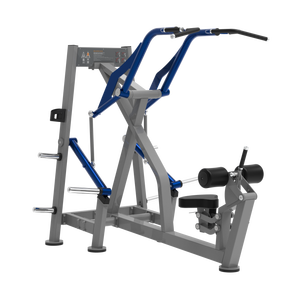
Heavy-duty chest press featuring independent converging movement arms for balanced muscular development and isolated pectoral activation.
Send an Inquiry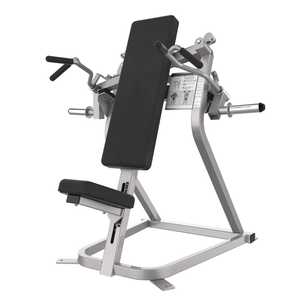
Ergonomic overhead shoulder press system with dual hand grip positions to target anterior and lateral deltoids safely under heavy loads.
Send an Inquiry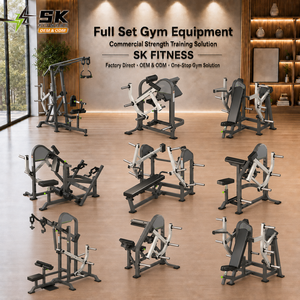
Complete turnkey commercial fitness center package engineered for athletic facilities, luxury hotel gyms, and commercial strength clubs.
Send an Inquiry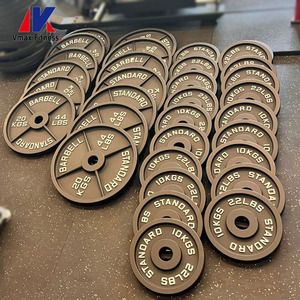
Precision-calibrated high-density rubber bumper plates with stainless steel center bushings built to withstand repeated drops on lifting platforms.
Send an Inquiry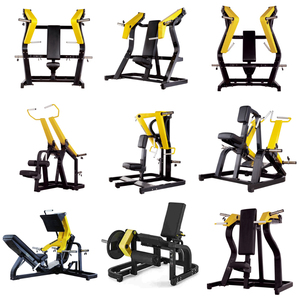
Custom engineered Q235 structural steel frame strength machine built to institutional specifications for heavy commercial facility use.
Send an Inquiry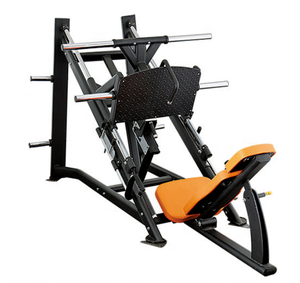
Commercial 45-degree linear leg press featuring dual safety lockouts, oversized anti-slip footplate, and industrial linear bearing guidance.
Send an Inquiry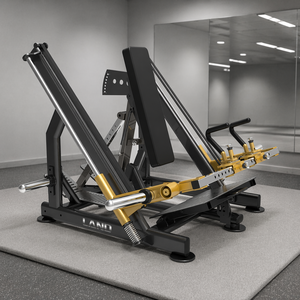
Iso-lateral seated row trainer with multi-position chest support pad and independent row levers for maximum latissimus dorsi recruitment.
Send an Inquiry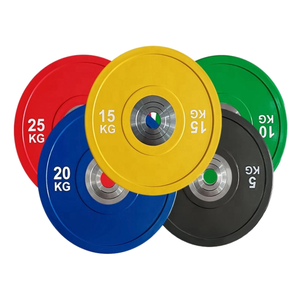
Custom branded competition bumper plates forged with cast iron cores and seamless vulcanized rubber wraps for minimum bounce and maximum longevity.
Send an InquiryIn the modern commercial strength training ecosystem, procurement decisions surrounding custom OEM plate loaded machines dictate the operational efficiency, safety, and long-term capital expenditure efficiency of elite athletic training facilities, commercial fitness clubs, and military tactical conditioning centers. Unlike consumer-grade strength units or lightweight selectorized stack equipment, commercial plate-loaded machinery relies on heavy-gage structural steel framing, bio-mechanically aligned pivot axes, and friction-free rotation mechanisms to handle massive kinetic loading without frame deflection or joint degradation.
As a global pioneer in heavy-duty strength equipment manufacturing with a legacy tracing back to 1976, our facility operates on an institutional engineering paradigm. Every machine is manufactured utilizing heavy-gauge Q235 structural steel tubing (available in 11-gauge 3.0mm to 7-gauge 4.5mm wall thicknesses), laser-cut with sub-millimeter precision, robotic MIG welded, and finished with multi-stage electrostatic powder coating. This whitepaper serves as an exhaustive procurement guide for athletic directors, facility owners, and equipment distributors seeking to evaluate OEM/ODM manufacturing capability, biomechanical divergence dynamics, and structural longevity metrics.
The fundamental metric of structural integrity in plate-loaded machines is structural steel yield strength. Standard fitness equipment utilizes light-gauge welded seam pipes susceptible to torsional fatigue under peak loads exceeding 500 kg. OEM industrial manufacturing mandates cold-drawn Q235 structural steel with yield strength exceeding 235 MPa. Combined with industrial-grade pillow block sealed bearings at every major pivot axis, this guarantees a smooth kinetic arc while eliminating lateral axis play under high asymmetrical plate loads.
Independent movement levers allow bilateral or unilateral training, correcting muscular imbalances while mimicking natural natural human movement arcs during pushing and pulling movements.
Custom cam geometry alters leverage ratio throughout the range of motion, matching the target muscle group's natural strength curve for optimal muscle fiber recruitment.
Integrated mechanical safety stop catches and heavy-duty frame gussets provide max-load protection without needing spotters during high-intensity training sessions.
Custom OEM plate-loaded equipment falls into four primary mechanical movement vectors: Converging Upper Body Push (Bench/Shoulder Press), Diverging Upper Body Pull (Lat Pull/Seated Row), Lower Body Compound Kinetic Alignment (Leg Press/Hack Squats), and Precision Free-Weight Olympic Plate Systems. Understanding the specific mechanical footprint and structural demands of each category is vital when outfitting a facility for long-term athlete development.
| Equipment Category | Primary Structural Frame | Kinematic Axis Type | Target Dynamic Load Capacity | Institutional Application |
|---|---|---|---|---|
| Super Horizontal Bench Press | 11-Gauge 50x100mm Oval Steel | Iso-Lateral Converging Arc | 600 KG / 1,320 LBS | NCAA Athletic Facilities, NFL Weight Rooms |
| Seated Shoulder Press Machine | 3.0mm Heavy-Duty Q235 Carbon Steel | Vertical Converging Overhead Path | 450 KG / 990 LBS | Commercial Gyms, Tactical Fitness Centers |
| 45-Degree Linear Leg Press | 7-Gauge Heavy Reinforced Box Section | Industrial Linear Bearing Glide Track | 1,000 KG / 2,200 LBS | High-Volume Powerlifting & High School Clubs |
| Adjustable Seated Row Trainer | 11-Gauge Precision Laser-Cut Steel | Dual Axis Diverging Independent Levers | 500 KG / 1,100 LBS | Collegiate Performance & Rehab Clinics |
| Vulcanized Competition Bumper Plates | Drop-Forged Stainless Steel Hub / Rubber | Durometer 90A High Density Cushion | 20,000+ Impact Drop Cycles | Olympic Lifting Platforms, Cross-Training Box |
When procuring plate-loaded strength equipment from an OEM manufacturer, the choice between fixed-axis pivot bars and iso-lateral independent levers fundamentally affects user safety and training outcomes. Fixed-axis machines force the athlete into a rigid motion path, often stressing elbow and shoulder joints if the user's anatomical proportions vary from the machine's median design profile. Iso-lateral technology allows each arm or leg to move independently along an converging or diverging arc. This freedom allows joints to move through their natural structural pathways, reducing shear stress on connective tissues while enforcing balanced bilateral force production.
The global commercial strength equipment market is experiencing a structural migration toward plate-loaded equipment solutions, driven by lower total cost of ownership (TCO), reduced cable/pulley maintenance, and superior high-load capacity. Global procurement managers and gym designers must anticipate key technological and structural shifts currently transforming the manufacturing landscape:
Modern collegiate and professional strength programs are increasingly moving away from arbitrary weight percentage charts in favor of Velocity-Based Training (VBT). OEM manufacturers are integrating built-in linear transducer mounting ports and digital load-cell sensors directly into plate-loaded machine lever arms. This allows strength coaches to track bar velocity, peak wattage output, and power decay in real-time without cumbersome external attachments.
A weight room is no longer just a training area—it is a critical recruitment asset for university athletic programs and commercial franchise brands. OEM production lines must offer comprehensive color customizability. Modern specs require precision laser-cut custom logo laser etching into structural steel gussets, custom frame powder coat color matching (Pantone/RAL standards), and custom embroidered vinyl upholstery.
Global supply chain mandates now prioritize low-carbon steel manufacturing processes and eco-friendly powder coating technologies. Our manufacturing facilities utilize zero-VOC electrostatic powder coatings and closed-loop water filtration systems during pre-treatment washing phases, adhering to ISO 14001 environmental management standards without compromising coating thickness or rust defense.
With the adoption of the Army Combat Fitness Test (ACFT) and enhanced tactical conditioning protocols across military bases worldwide, demand for high-capacity, low-breakdown plate-loaded equipment has surged. Equipment built for tactical applications requires reinforced footplates, multi-grip hand handles, and high-impact rubber cushioning designed to sustain harsh, multi-user shifts day in and day out.
To appreciate the advanced engineering of modern custom OEM plate-loaded machines, one must examine the evolution of commercial strength technology over the past five decades:
Early strength machines utilized simple straight-bar fixed pivots welded to basic square tubing. Movement paths were linear and unyielding, resulting in significant joint stress at lockout points and restricted ranges of motion.
The introduction of linear bearing shafts allowed smooth vertical glide for leg presses and horizontal presses. However, maintenance demands were high, as dust and un-lubricated shafts frequently caused bearing binding.
Industrial design shifted toward natural biomechanical converging and diverging movement paths using sealed pillow-block bearings. Machines began replicating the natural arc of free-weight movements while maintaining plate-loaded stability.
Today's state-of-the-art OEM manufacturing combines 3D CAD modeling, robotic welding, heavy Q235 structural steel, integrated digital load tracking, and complete custom branding for specialized athletic facilities.
Direct answers for facility buyers, equipment distributors, and strength coaches evaluating commercial plate-loaded strength equipment contracts.
Our commercial plate-loaded machinery is manufactured using premium Q235 structural carbon steel tubing. Wall thicknesses range from 11-gauge (3.0mm) for standard heavy commercial applications up to 7-gauge (4.5mm) for structural gussets and heavy-load bases such as 45-degree leg presses. This heavy-gage construction prevents frame flexing under load, maintaining precise alignment across all pivot bearings.
Once you provide your floor plan measurements, ceiling height clearances, and target athlete capacities, our in-house engineering team generates high-resolution 2D and 3D CAD facility renderings. This service models athlete movement flow, equipment spacing, platform footprints, and custom branding choices—allowing administrative stakeholders and boards to review and approve the facility design prior to manufacturing.
As a direct OEM/ODM manufacturer, we offer end-to-end customization options. Frame finishes can be powder-coated in any custom RAL or Pantone color code with matte, gloss, or textured finishes. Vinyl upholstery is available in multiple colors with high-density anti-microbial foam cores, featuring custom embroidered team or brand logos. Additionally, structural steel wear-guards and frame plates can be laser-cut with custom facility branding.
We provide full export-compliant packaging, including custom reinforced wooden crates, protective stretch wrap, and foam edge guards. Equipment can be shipped fully assembled or modularly flat-packed to maximize container loading efficiency. Detailed assembly schematics, exploding parts diagrams, and hardware callouts are provided with every order to simplify installation on site.
Plate-loaded strength machines offer significantly lower total cost of ownership (TCO) compared to selectorized cable stack units. Because plate-loaded machines eliminate complex cable tracks, guide rods, selector pins, and weight stack bushings, mechanical wear points are minimized. Heavy-duty sealed bearings and solid steel weight horns require virtually no maintenance while handling substantially heavier dynamic load capacities.
All structural steel frames manufactured at our facility carry a Lifetime Structural Warranty covering frame welds and structural tubing integrity. Moving components, including pillow block bearings, linear guides, and handles, are covered by a 5-year commercial warranty, while wear items like upholstery and rubber stops carry a 1-year replacement warranty. Our manufacturing processes strictly comply with ISO 9001 quality management and CE safety standards.
Partner with an industry-leading OEM strength equipment manufacturer. Share your facility dimensions, custom brand specifications, or equipment volume requirements with our engineering team today.
Send an Inquiry