As the primary hub for global commercial fitness hardware, Chinese manufacturers supply over 70% of structural strength equipment, power racks, selectorized machinery, and free weights used in collegiate facilities, commercial clubs, and defense tactical bases worldwide.
Explore high-capacity commercial equipment engineered for NCAA training centers, professional fitness franchises, military tactical units, and heavy warehouse logistics environments. Manufactured under rigorous quality control standards in China.
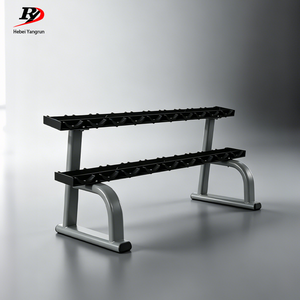
Modern commercial fitness equipment procurement requires a rigorous evaluation of steel structural integrity, biomechanical movement arcs, robotic manufacturing precision, and long-term total cost of ownership (TCO). Chinese fitness equipment manufacturers in premier industrial hubs—such as Shandong (Dezhou/Jinan clusters) and Jiangsu—have evolved from simple OEM casting shops into world-class research, design, and automated manufacturing centers.
When sourcing heavy strength machinery, buyers must verify structural wall thickness. True commercial power racks and selectorized units utilize 11-gauge (3.0mm) structural Q235/Q345 steel tubing or 7-gauge structural plates. Avoid 14-gauge (2.0mm) consumer-grade material when outfitting NCAA, military, or high-volume commercial facilities.
Top-tier factories employ 3D fiber laser cutters providing precision tolerances within ±0.05mm for frame bolt holes and attachment ports. Multi-axis OTC robotic welding arms ensure uniform weld penetration, eliminating weak heat-affected zones that lead to structural failure under heavy impact loading.
Commercial longevity depends on multi-stage surface treatments. Leading Chinese facilities utilize a 7-tank pre-treatment wash (degreasing, phosphating, pure water rinse) followed by automated electrostatic thermosetting powder coating (80–120 micron thickness) cured at 200°C for extreme scratch and sweat corrosion resistance.
Drawing on legacy engineering principles developed since 1976, top-tier manufacturing partners seamlessly combine heavy industrial durability with flexible OEM/ODM customization. Whether outfitting high school athletic departments, collegiate training facilities, or tactical defense spaces, direct factory integration delivers crucial competitive advantages:
Before steel fabrication begins, facility planners receive full 2D and 3D CAD render mockups. This allows strength coaches and athletic directors to visualize traffic flow, rack footprint density, safety drop zones, custom frame laser-cut branding, and color coordination.
High-yield steel tubing combined with continuous seam welding allows premier manufacturers to back structural frames with Lifetime Warranties. This guarantees institutional buyers and board members that heavy-use equipment withstands multi-athlete training sessions year after year.
Established export manufacturers streamline global government procurement through contract compliance alignable with cooperative purchasing programs (e.g., OMNIA Partners), simplifying complex bid processes for public school districts and municipal facilities.
The global gym equipment supply chain is undergoing structural shifts driven by digital telemetry, modular ecosystem standardization, and stringent sustainability metrics. B2B buyers must align their purchasing strategies with these overarching industrial trends:
| Procurement Vector | Legacy Industry Standard (2015–2020) | Emerging Global Standard (2026–2030) | Strategic Buyer Advantage |
|---|---|---|---|
| Rack & Rig Modularization | Fixed single-purpose welded racks | Universal 3x3" uprights with laser-cut numbers & magnetic attachments | Enables rapid expansion without discarding foundational frames |
| Upholstery & Padding | Standard vinyl over low-density foam | High-density molded polyurethane foam with anti-microbial fire-retardant skin | Prevents bottoming out under 500+ lb loads; resists sweat breakdown |
| Smart Telemetry Integration | Standalone mechanical weight stacks | Integrated linear transducers & Bluetooth velocity-based training sensors | Provides real-time output data for athletic performance tracking |
| Freight & Packaging Optimization | Fully assembled bulk shipments | Flat-pack modular design with CNC-cut protective wooden crating | Reduces ocean freight CBM by 40–60%; minimizes transit abrasion |
Modern buyers are shifting away from off-the-shelf distributor catalogs toward direct factory OEM customization. Custom powder-coat color matching (RAL codes), laser-etched university/club crests on rack gussets, and customized storage attachments allow athletic brands to project a distinct visual identity while cutting out intermediary markups.
Continuous evolution in human movement science and facility environmental controls has driven several key innovations in equipment engineering:
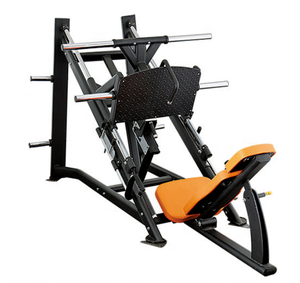
Advanced plate-loaded machines (such as 45-degree leg presses, chest presses, and lat pulldowns) now incorporate converging and diverging axis arms that mirror natural human joint kinematics. This reduces acromioclavicular and knee joint shear stress while maximizing muscle peak contraction.
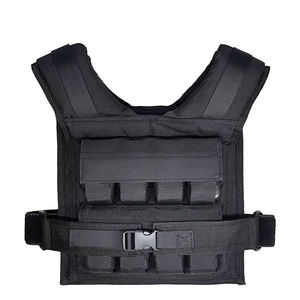
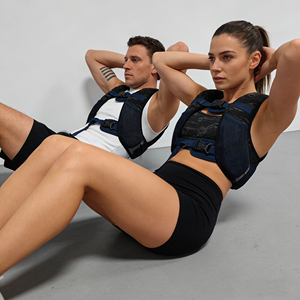
Hybrid training modalities combining weighted vest plate carriers (utilizing 1000D Cordura and laser-cut MOLLE systems) with velocity-based loading give military tactical personnel and functional fitness athletes progressive load variability without compromising natural movement cadence.
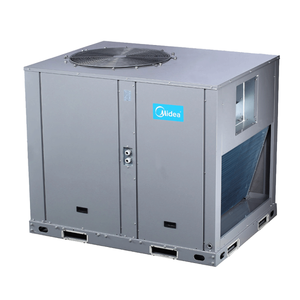
Large multi-zone indoor athletic complexes require specialized commercial rooftop packaged HVAC units (e.g., 5-Ton systems). Proper airflow control prevents humidity-induced frame rust, controls ambient moisture, and protects high-density rubber flooring from thermal degradation.
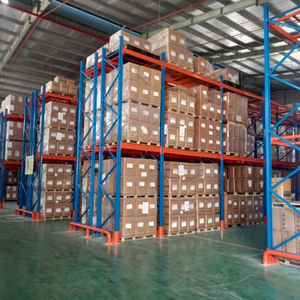
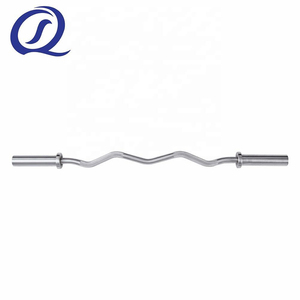
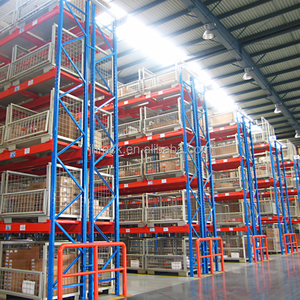
Multi-use athletic centers and commercial distribution hubs rely on heavy-duty selective pallet racking systems and modular factory stacking racks. Structural Q235 steel warehousing frames allow facilities to stage bumper plates, barbells, and accessories safely while maximizing vertical clearance.
Direct answers to critical procurement, technical specification, and shipping inquiries for gym owners, procurement directors, and international buyers.
Professional commercial strength equipment requires high-yield Q235B or Q345B structural steel tubing with a minimum wall thickness of 11-gauge (3.0mm). Critical stress points, such as power rack base plates and machine pivot points, utilize 7-gauge (4.5mm to 6.0mm) laser-cut steel plates to ensure permanent structural rigidity under max-effort loading conditions.
Leading Chinese manufacturers adhere to ISO9001 Quality Management Systems and EN ISO 20957-1 international safety standards for stationary training equipment. QC procedures include raw material spectrographic analysis, robotic weld ultrasonic testing, salt spray corrosion testing (500+ hours), dynamic cycle load testing (over 100,000 continuous reps), and pre-shipment trial assembly.
Yes. Simply provide facility architectural dimensions, ceiling height clearances, door access pathways, and target athlete capacity. Our specialized 2D/3D CAD design team will generate a precision layout showing traffic flow, rack footprint density, platform positioning, customized brand colors, and logo placements before order commitment.
For custom OEM/ODM production runs, standard factory MOQs typically start at one 20ft container (or equivalent multi-product package). Production lead times range from 25 to 35 days post-drawing approval, depending on powder coating customization and laser etching requirements.
All finished steel frames undergo dual-layer bubble wrap wrapping, heavy EPE foam corner protection, and secure placement inside heat-treated plywood crates or reinforced corrugated cartons. Desiccant packs are placed in every container to absorb ambient ocean humidity and prevent surface oxidation during transit.
Yes. Customization is a core advantage of direct manufacturing. Frame powder coats can be matched to any RAL or Pantone color code, and vinyl upholstery can be customized with high-density embroidered or heat-stamped logos for high school, collegiate, or commercial gym brand consistency.
Through our established distribution network, public sector buyers can streamline procurement via cooperative purchasing contracts (such as OMNIA Partners). This satisfies competitive bid requirements while securing direct factory pricing structures.
