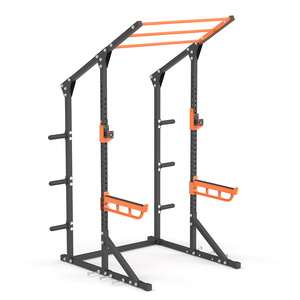
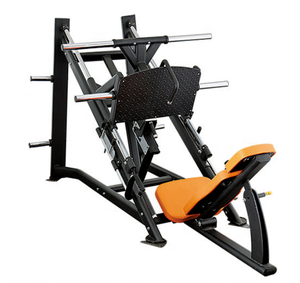
Direct factory-engineered strength apparatuses, weightlifting storage, racks, and tactical training modules exported worldwide.
An engineering whitepaper examining metallurgical precision, vibration acoustic isolation, wood-to-rubber dynamic response, and structural longevity in high-volume collegiate and commercial installations.
In modern strength and conditioning infrastructure—spanning NCAA Division I weight rooms, professional sports complexes, commercial fitness chains, and military tactical training facilities—the Olympic weightlifting platform is no longer treated as a simple piece of peripheral flooring. It is a highly tuned kinetic energy damping system designed to absorb repeated high-velocity impacts, mitigate acoustic shockwaves, protect structural concrete slab substrates, and provide athletes with a precise, non-slip force transfer surface.
As the global market leader in OEM/ODM strength equipment manufacturing, Chinese exporters have transitioned from commodity metal fabrication to high-precision structural engineering. By utilizing robotically welded heavy-gauge tubular steel frames, multi-layer hardwood density matrix cores, and specialized high-density vulcanized rubber drop tiles, top-tier Chinese suppliers now set the international benchmark for durability, custom branding, and compliance with international standards such as IWF (International Weightlifting Federation) and EN 957-1 Class S commercial specifications.
Fabricated from 11-gauge (3.0mm) to 7-gauge (4.5mm) Q235B/Q355B structural steel tubing with laser-cut gusset corner plates to eliminate frame shear under heavy drops.
Engineered dual-layer vulcanized SBR/EPDM rubber impact zones with Shore A 65–70 hardness ratings designed for >85% kinetic energy dissipation and noise attenuation.
High-precision CNC routing for hardwood center decks (bamboo or Red Oak), UV-cured polymer anti-slip coatings, and full 2D/3D facility layout integration before production.
Deconstructing the engineering components that differentiate commercial-grade weightlifting platforms from budget consumer equipment.
When a 250 kg barbell is dropped from an overhead position (approx. 2.1 meters), it imparts an instantaneous dynamic load exceeding 15,000 Newtons onto the impact surface. Without a properly constructed weightlifting platform, this energy propagates into the floor slab, causing concrete micro-cracking, premature bumper plate degradation, extreme acoustic resonance, and rebound instability that compromises lifter safety.
Our manufacturing protocol addresses these mechanics through a tri-component material synergy:
| Engineering Metric | Commercial Grade (Standard) | Collegiate / Institutional | Elite Tactical & Olympic (Heavy Duty) |
|---|---|---|---|
| Frame Material | Q235 Steel (2.5mm / 12-Gauge) | Q235B Steel (3.0mm / 11-Gauge) | Q355B Structural Steel (4.0mm / 8-Gauge) |
| Frame Coating | Single-Coat Electrostatic Powder | Dual-Coat Epoxy + Texture Powder | Zinc-Rich Primer + Thermo-Set Texture Coat |
| Center Deck Material | Birch Plywood / Melamine Top | High-Density Bamboo / Hard Maple | CNC Multi-Ply Bamboo Core + Laser-Etched Deck |
| Drop Tile Density | 850 kg/m³ Recycled SBR | 950 kg/m³ High-Density SBR | 1100 kg/m³ Vulcanized Virgin EPDM Top SBR |
| Shock & Noise Reduction | Delta Lw = 18 dB | Delta Lw = 24 dB | Delta Lw = 32+ dB (Acoustic Sub-base) |
| Rack Integration | Standalone / Optional Band Pegs | Full Insert Flange System | Custom Laser-Cut Flex-Rack Seamless Fit |
| Expected Service Life | 5 - 7 Years | 10 - 15 Years | Lifetime Structural Warranty |
Key industry shifts shaping global supply chain strategies, product design, and facility architecture for commercial strength centers.
Traditional standalone wood/rubber platforms are rapidly giving way to continuous modular flooring platforms. Facilities demand zero-threshold transitions where the platform sits flush with surrounding 8mm to 32mm rubber gym flooring, reducing tripping hazards and maximizing usable training square footage.
With commercial gyms opening in multi-story mixed-use urban complexes, low-frequency sound transmission is a primary legal liability. Procurement managers are prioritizing weightlifting platforms incorporating specialized elastomer dampers and sub-surface air channels that isolate frequencies below 100 Hz.
Global buyers are enforcing stringent environmental safety standards (such as REACH, RoHS, and California Proposition 65). Leading Chinese exporters are abandoning low-cost binder glues in favor of peroxide-cured odor-free vulcanized EPDM/SBR compounds, protecting indoor air quality in enclosed facilities.
Selecting a direct manufacturer in China offers procurement officers unprecedented flexibility and cost efficiency. Modern Chinese production lines utilize automated robotic fiber laser cutting machines (accurate to ±0.05mm), 3D pipe bending, and automatic powder-coating lines. This allows for total customization:
Built on nearly five decades of strength design tradition, combining robust manufacturing infrastructure with personalized B2B service.
Send us your building dimensions and structural column maps. Our in-house architectural team creates detailed 2D traffic flow designs and 3D realistic visual renderings before contract signing.
Every batch undergoes weld penetration testing, drop-impact fatigue simulation (100,000 continuous drops), salt spray corrosion tests, and dimensional tolerance inspection under ISO9001 systems.
We handle FOB, CIF, DDP, and DDU shipping terms with full documentation compliance, ISPM-15 heat-treated wooden crate packaging, and seamless customs clearance assistance globally.
Addressing technical, financial, and logistical queries from international distributors, commercial gym operators, and facility contractors.
Speak directly with our senior engineering team. Request a custom factory price quote, CAD 3D layout design, or full product sample kit today.