Precision-engineered, CE-certified strength apparatuses tailored for high-volume athletic facilities, collegiate weight rooms, and commercial fitness centers.
Modern commercial athletic centers, university strength hubs, military tactical facilities, and enterprise fitness spaces are no longer designed merely around aesthetic appeal or basic floor density. Modern facility development relies on ergonomic spatial flow, mechanical integrity, strict safety certifications, and biomechanical optimization. Selecting a qualified CE Certified Gym Layout Design Factory & Supplier is the single most critical structural decision for facility directors, institutional buyers, and commercial facility developers.
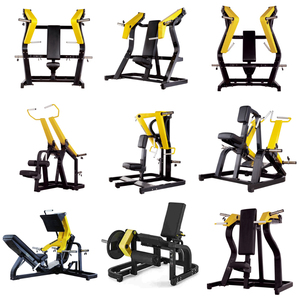
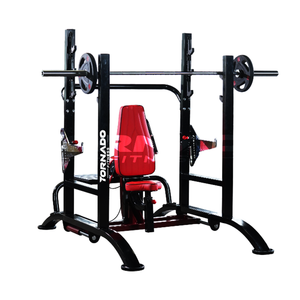
A CE mark (Conformité Européenne) under the EN 957 / ISO 20957 safety standard guarantees that commercial strength equipment—ranging from heavy-duty power racks and plate-loaded leverage machines to modular storage trees and high-density soft plyometric boxes—has undergone rigorous structural load strain, fatigue testing, non-toxic material compliance, and pinch-point risk mitigation. Without verified CE certification and precision 3D CAD layout integration, commercial strength zones suffer from traffic bottlenecks, accelerated structural wear, premature cable degradation, elevated liability risk, and poor athlete throughput during peak hours.
With a legacy spanning five decades since 1976, Samson Equipment Inc. and premier manufacturing partners have set the benchmark in heavy-duty strength equipment manufacturing. Combining heavy-gauge Q235 structural steel fabrication, electrostatic robotic powder coating, laser-guided tube cutting, and custom 3D spatial rendering, institutional clients receive a comprehensive end-to-end gym design solution engineered to withstand heavy, continuous use.
Architecting an elite strength facility requires combining structural engineering principles with practical coaching dynamics. When designing spaces for high school programs, NCAA athletic departments, tactical defense units, or multi-use commercial fitness franchises, our spatial engineering team adheres to three core design principles:
Every strength bay must maintain strict 36-inch (914mm) perimeter clearance buffers between barbell ends and adjacent equipment. Layout designs enforce clear separation between dynamic explosive zones (plyometrics/turf) and static resistance platforms to prevent collisions.
Heavy free-weight sections demand high-impact rubber subflooring (minimum 8mm–12mm density) backed by structural slab calculations capable of handling multi-ton point drops without acoustic vibration bleed or structural fatigue.
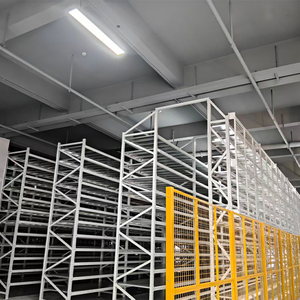
Utilizing high-density 1000kg modular rack storage systems and integrated plate trees eliminates floor clutter, optimizing athlete-per-square-foot ratios by up to 45% compared to non-integrated layouts.
Procurement committees must recognize the engineering differences between residential-grade equipment and true commercial-grade apparatuses manufactured in certified factory environments:
| Evaluation Parameter | Commercial CE Certified (EN 957-2/4 Class S) | Standard Retail / Residential Equipment |
|---|---|---|
| Structural Material | 11-Gauge (3.0mm) to 7-Gauge Q235 Heavy Structural Steel | 16-Gauge to 14-Gauge (1.5mm - 2.0mm) Thin Steel Tubing |
| Static Load Capacity | Racks & Benches rated at > 1,000 kg (2,200 lbs) test load | Max rating 150 kg - 250 kg (330 lbs - 550 lbs) |
| Safety Factor Threshold | Minimum 4:1 safety factor for cables, welds, and pivot points | 1.5:1 or unverified stress tolerance ratios |
| Upholstery & Core Foams | High-density Anti-bacterial EPE/EVA Foam with PVC Vinyl Cover | Low-density recycled sponge board prone to rapid flattening |
| Coating & Anti-Corrosion | Dual-stage electrostatic powder coating (salt-spray tested 500h) | Single-coat liquid spray paint susceptible to rust and chipping |
As global sports performance paradigms shift toward athletic readiness, movement longevity, and data-driven training environments, gym equipment purchasing and spatial configuration trends are evolving rapidly. Institutional buyers and gym operators must future-proof their capital investments by aligning with four major market trends:
Single-purpose machinery is increasingly replaced by multi-functional flex power racks. Racks outfitted with integrated cable column attachments, band pegs, landmines, pull-up stations, and dedicated bumper plate storage allow coaches to execute multi-planar strength cycles within a single 8'x8' footprint. This shift maximizes station throughput for large teams and commercial group training formats.
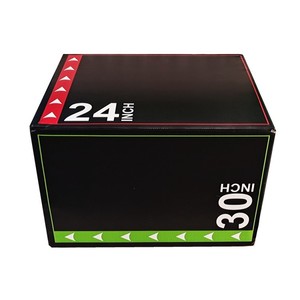
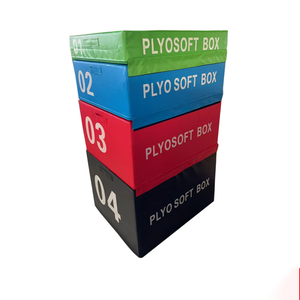
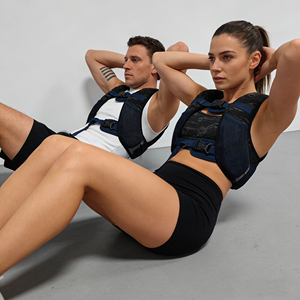
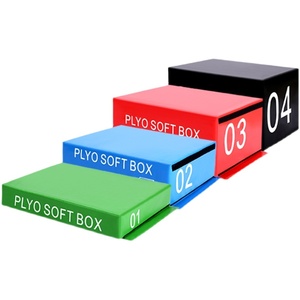
Athlete injury prevention has driven high demand for high-density EPE 3-in-1 soft foam plyo boxes and customizable weighted tactical vests. Unlike traditional wooden or metal plyo boxes that cause shin trauma upon missed landings, multi-layer high-density soft foam jump boxes absorb impact force while maintaining absolute structural rigidity up to 150kg landing mass. Tactical weighted vests allow incremental load increases (3kg to 10kg) using soft iron micro-weights, supporting conditioning protocols for elite military units and tactical personnel.
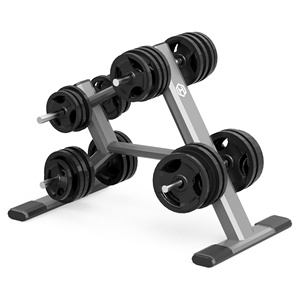
Floor clutter is a major safety hazard in busy training facilities. Future-ready facility designs incorporate heavy-duty modular rack storage systems rated up to 1000kg alongside specialized floor-standing plate trees. Elevating free weights, kettlebells, wall balls, and Olympic bars off the main floor reduces slip-and-trip hazards while maintaining strict compliance with occupational health and safety codes.
Modern athletic programs view their weight room as a powerful recruiting and branding asset. Leading equipment suppliers offer full powder-coat color matching (incorporating team hex colors), laser-cut logo faceplates, and custom vinyl upholstery embroidery. Facilities receive factory-direct engineering tailored precisely to their institutional identity without sacrificing structural lead times.
Partnering with an established manufacturer guarantees that your facility layout is backed by decades of physical testing, field validation, and engineering expertise. Samson Equipment Inc. brings structural precision to every project:
Founded in 1976 by Dave & Linda Schroeder, Samson brings half a century of hands-on fabrication experience. Our strength equipment anchors top-tier high schools, NCAA Division I athletic programs, NFL training facilities, and military bases across the globe.
We eliminate spatial guesswork by offering complete CAD layout engineering. Clients receive high-resolution 3D walkthrough renderings detailing spatial clearances, training zones, traffic corridors, and color customization before committing budget capital.
All main structural steel frames, robotic welds, and load-bearing columns are backed by our industry-leading Samson Lifetime Warranty. We build equipment to handle heavy, continuous institutional use over decades of service.
As a contract holder with OMNIA Partners, Samson simplifies procurement for eligible public schools, state universities, municipal recreation centers, and government agencies, expediting compliance and purchasing workflows.
From automated fiber-laser tube cutting to precision TIG robotic welding cells, our production lines maintain zero-defect tolerances, ensuring uniform bolt-hole alignment, smooth plate loading, and flawless assembly on site.
Our turnkey engineering team manages the entire project lifecycle—from container loading and international freight logistics to professional on-site equipment anchoring, assembly, and safety sign-off.
Comprehensive technical and strategic answers for athletic directors, commercial gym owners, procurement officers, and facility engineers planning a layout overhaul or new equipment deployment.
A CE certified commercial gym layout must comply with EN 957-1 (General Safety Requirements & Test Methods) and specialized sub-standards such as EN 957-2 (Strength Training Equipment) and EN 957-4 (Strength Benches). This mandates minimum safety distances to prevent body part entrapment, 4:1 dynamic load safety factors, non-toxic lead-free powder finishes, and structural stability tests under maximum load tilt angles.
Clients provide room dimensions, ceiling height clearances, door/window positions, structural column locations, electrical conduit locations, and athlete capacity goals. Our CAD engineering team constructs a 3D digital model displaying exact equipment placement, walking corridors, platform drop zones, and color branding. This visualization allows stakeholders to secure institutional buy-in prior to manufacturing.
Q235 carbon structural steel offers optimal yield strength (235 MPa) and high tensile ductility. Unlike brittle low-grade steel alloys that crack under sudden shock loads, Q235 absorbs repeated dynamic drops from heavy barbells and plate loading without micro-fracturing, guaranteeing decade-long frame integrity under commercial volume.
We recommend allocating 60 to 80 square feet (5.5 to 7.4 sq meters) per athlete station. A standard dual-sided flex rack bay with platform and plate storage requires approximately 10' x 8' (3m x 2.4m) of floor area, plus a 36-inch clear perimeter zone for safe coach movement and spotter positioning.
PVC EPE soft foam plyometric boxes utilize ultra-high density expanded polyethylene (EPE) cores wrapped in heavy-duty non-slip PVC vinyl. Unlike wood or metal boxes, soft jump boxes absorb landing impact, drastically reducing stress on athlete joints while eliminating painful scrapes during missed jumps. Their 3-in-1 multi-angle design allows instant height changes (20", 24", 30") by rotating the box.
Yes. By leveraging our OMNIA Partners contract partnership, eligible U.S. public school districts, state universities, municipal parks departments, and government agencies can bypass tedious length RFP processes and purchase CE-certified strength equipment through pre-negotiated, competitively solicited contract pricing.
During the design sign-off, client brand colors are matched via industrial RAL powder coating palettes. Main uprights and cross-members undergo dual-stage electrostatic powder application. Custom logos are laser-cut from 3mm steel plates or embroidered onto high-grade marine vinyl upholstery before final quality inspection.
Standard production lead times range between 4 to 6 weeks depending on customization complexity and order volume. International freight, customs clearance, and white-glove on-site assembly typically require an additional 2 to 4 weeks. Turnkey scheduling is fully coordinated by our dedicated logistics team.
Partner with an industry leader backed by 50 years of manufacturing excellence, lifetime warranties, and complimentary 3D CAD facility design.
Inquire Now