Collegiate Athletic Training Facilities are more than impressive buildings. They are working environments where athletes recover, train, and prepare for competition. A strong facility pairs skilled staff with practical design: clear sightlines, accessible treatment areas, reliable equipment, and space for careful assessment. Small details matter. A treatment table placed beside a crowded walkway can disrupt both privacy and focus.
Vince Lombardi, the renowned football coach, is often credited with saying, “The achievements of an organization are the results of the combined effort of each individual.” His words speak to a useful principle here: a facility succeeds through coordinated work by athletic trainers, coaches, administrators, designers, and athletes. The quote is about teamwork, not facility design itself. That distinction matters.
This overview examines ten collegiate training facilities worldwide through their visible features, services, and role in athlete care. It considers how spaces support daily routines, from rehabilitation equipment and open training floors to quiet consultation rooms. Rankings can invite debate. Budgets, climate, campus needs, and public information differ, so no single list can settle every comparison.
The best space is not always the largest. Sometimes, a well-placed recovery area says more than a dramatic entrance. These examples offer ideas, but they also invite scrutiny: Does impressive design translate into better support? That question deserves a careful answer.
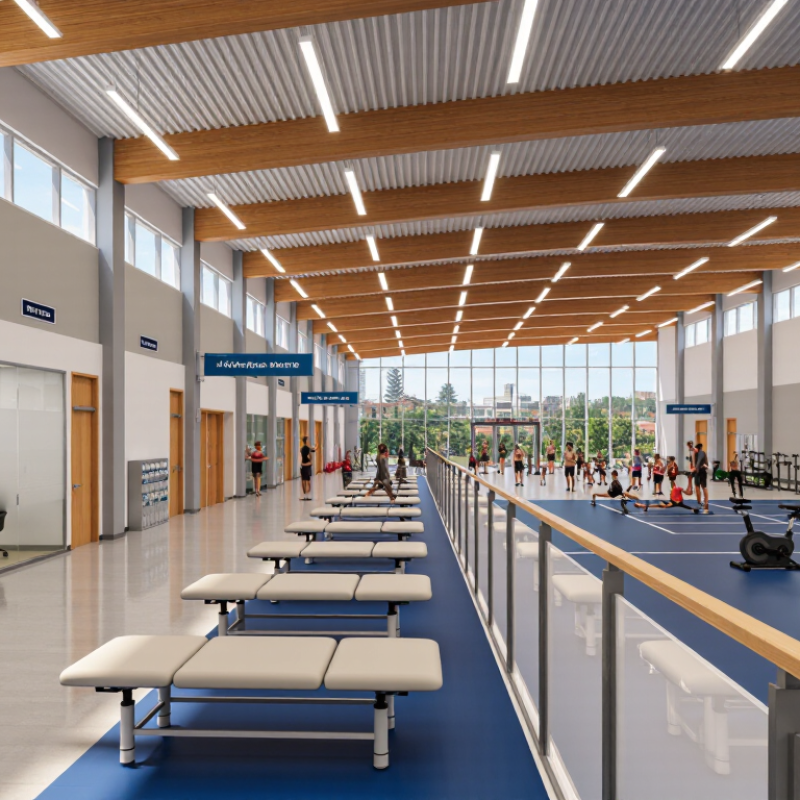
Evaluating collegiate athletic training facilities requires more than counting rooms or machines. A strong assessment looks at how safely and consistently athletes can train, recover, and receive care. Inspect flooring for worn seams, check that equipment is maintained, and note whether treatment areas protect athletes’ privacy. Small details matter.
Review access, too. Can athletes with different mobility needs use the main training areas? Are hydration stations, first-aid supplies, and recovery spaces easy to reach? Consider how coaches, athletic trainers, and strength staff share information. Reliable coordination supports better decisions, though a polished building alone cannot prove that communication works. Facility visits, maintenance records, and feedback from athletes offer useful evidence. No single score tells the whole story.
Tips: Visit during a busy training period. Watch how people move between spaces, and ask how equipment problems are reported. Compare facilities using the same criteria, while accounting for climate, sports offered, and available resources. Be cautious with glossy photos; they rarely show crowded schedules or delayed repairs. Even a careful review has limits. A facility may look excellent on paper, yet everyday use can reveal gaps.
Across the world, the leading collegiate athletic facilities are defined by more than size or striking architecture. They bring strength training, sports medicine, rehabilitation, and recovery into a connected daily routine. NCAA’s 2023–24 Sports Sponsorship and Participation Rates Report counts more than 500,000 student-athletes across its member institutions in the United States. That scale makes safe access, qualified staff, and dependable equipment essential—not decorative extras.
The World Health Organization’s 2024 analysis estimated that 31% of adults worldwide did not meet recommended activity levels in 2022. University facilities cannot solve that problem alone, but they can make healthy movement part of campus life. The strongest examples provide adaptable training areas, accessible routes, quiet recovery rooms, and treatment spaces close to the field. Small details matter: clear sightlines, dry flooring, and enough room to move safely between stations.
A top-ten comparison should also examine how facilities serve different sports, climates, and student needs—not just how impressive they look in photographs. A heat-ready indoor track may be vital in one region; shaded outdoor areas may matter more elsewhere. No ranking is perfect. Published participation figures rarely show whether athletes can actually book recovery space when they need it. That gap deserves closer attention.
| Rank | Facility | University | Location | Training focus | Notable facility feature |
|---|---|---|---|---|---|
| 1 | Indoor Speed-Skating Oval | University of Calgary | Calgary, Canada | Speed skating, athlete development, and sports science | Features a 400-metre indoor oval and served as a speed-skating venue for the 1988 Winter Olympics. |
| 2 | Goldring Centre for High Performance Sport | University of Toronto | Toronto, Canada | Basketball, volleyball, fitness, and sports medicine | The approximately 200,000-square-foot centre includes a field house with seating for about 2,000 spectators. |
| 3 | Sports Training Village | University of Bath | Bath, United Kingdom | Multi-sport training, swimming, athletics, and racquet sports | Its facilities include a 50-metre swimming pool, athletics facilities, and indoor tennis courts. |
| 4 | High-Performance Sports Campus | Loughborough University | Loughborough, United Kingdom | Multi-sport performance training and athlete support | The campus brings together specialist sports venues, strength and conditioning, and sports science support. |
| 5 | Football Operations and Training Centre | The Ohio State University | Columbus, United States | Football training, strength and conditioning, and team operations | The expanded training centre is reported at approximately 315,000 square feet and includes an indoor practice field. |
| 6 | Football Athletic Training Centre | University of Alabama | Tuscaloosa, United States | Football training, rehabilitation, and strength and conditioning | The large, multi-level facility combines indoor practice space with team training and support areas. |
| 7 | Anderson Training Centre | University of Tennessee | Knoxville, United States | Football training, sports medicine, and strength and conditioning | The approximately 145,000-square-foot centre includes an indoor practice field and dedicated athlete support spaces. |
| 8 | Football Training Complex | Clemson University | Clemson, United States | Football practice, sports performance, and player recovery | The complex includes a full-length indoor practice field and specialised team training spaces. |
| 9 | Football Training Centre | University of Florida | Gainesville, United States | Football training, strength and conditioning, and sports medicine | The approximately 142,000-square-foot facility includes an indoor practice field and athlete recovery areas. |
| 10 | Football Performance and Training Centre | University of Oregon | Eugene, United States | Football training, performance development, and athlete support | The approximately 145,000-square-foot centre combines team operations, strength training, and indoor practice space. |
| This is an editorial selection of notable collegiate training facilities, not an official or universally recognised ranking. Facility details and reported areas may vary by source and subsequent renovations. | |||||
Elite collegiate training spaces are designed around movement, not photogenic equipment. Strength areas need clear sightlines, durable flooring, and enough room for supervised lifting. Sprint lanes should connect naturally to warm-up and recovery zones, so athletes are not crossing busy weight rooms between drills. Separate rehabilitation space helps trainers assess movement without competing with music and traffic. Small details matter: adjustable benches, labeled storage, and water stations within easy reach. They save minutes. Sometimes the transition between areas still feels awkward, even in an impressive facility.
Equipment planning should match coaching needs, athlete numbers, and maintenance capacity. The American College of Sports Medicine’s 2024 Worldwide Survey of Fitness Trends ranked wearable technology as the leading trend. That finding supports planning for secure charging, reliable connectivity, and private spaces where athletes can review training data. But more sensors do not automatically produce better decisions. Coaches need time and clear protocols to interpret the numbers.
A practical equipment mix may include racks, platforms, medicine balls, resistance bands, and accessible mobility tools. Keep frequently used items visible and heavier gear safely stored. A 2023 National Athletic Trainers’ Association position statement on athletic training facilities also emphasizes appropriate space, equipment, and access to care. Even strong designs deserve regular review: observe traffic at peak hours, ask athletes what slows them down, and adjust the layout when practice routines change.
At leading collegiate athletic training facilities, sports medicine is woven into everyday training, not saved for major injuries. Athletes may move from a movement assessment to treatment, then back to practice with clear guidance. That matters. A clean examination room, private consultation space, and equipment for balance or strength testing can support careful decisions. The best care also depends on qualified staff who explain findings in plain language and know when an athlete needs further medical evaluation.
Recovery spaces should make useful habits easier. Quiet areas, comfortable treatment tables, accessible hydration, and room for supervised mobility work can help athletes follow individual plans. Small details count. A crowded doorway or rushed handoff can disrupt care, even in a well-equipped building. Recovery is not one machine or one routine; sleep, workload, nutrition, and communication all shape how an athlete feels. Facilities can support those basics, but cannot guarantee results.
Athlete support extends beyond physical treatment. Private conversations, reliable referrals, and coordination among medical staff, coaches, and strength professionals can reduce confusion during a demanding season. Not every plan works neatly on paper. Staff must adjust when symptoms change or schedules collide, while protecting the athlete’s health. A facility’s real value is often visible in these ordinary moments: a careful recheck, a direct answer, or permission to take more time.
A collegiate athletic training facility is more than a room filled with weights. It shapes how athletes prepare, recover, and communicate with support staff. At 4 p.m., a crowded schedule can turn a narrow walkway into a bottleneck. Clear sightlines, labeled storage, and enough space for mobility work make daily routines safer and less rushed. Small details matter.
Good facilities connect strength training, sports medicine, nutrition support, and quiet recovery areas without treating every athlete alike. Coaches and qualified clinicians can use training logs, movement observations, and regular check-ins to adjust workloads. Equipment helps, but careful supervision matters more than an impressive machine. A well-planned rehabilitation space can make gradual return-to-play work easier to coordinate, though no room can replace sound clinical judgment.
Across collegiate programs worldwide, climate, funding, campus layout, and local sporting traditions shape what works. One campus may need shaded outdoor areas; another may prioritize indoor courts and adaptable training zones. There is no universal blueprint. I would be cautious about ranking facilities by size alone: a polished building can still feel intimidating or exclude athletes with different needs. Sometimes the best sign of a strong facility is quieter—athletes know where to go, staff notice when routines change, and recovery is treated as part of training.
How Training Facilities Shape Collegiate Athletics
Participation figures offer a useful planning context: facilities must serve athletes across programs of very different sizes. These rounded U.S. figures are not a worldwide facility ranking, and do not measure facility quality.
Source: U.S. collegiate sports participation reports, 2022–23; figures rounded.
Look beyond room counts and machines. Check safety, equipment maintenance, athlete privacy, and how easily people move between spaces. Looks can mislead.
Check flooring for worn seams, treatment tables for cleanliness, and equipment for signs of poor maintenance. Ask how staff report broken equipment.
Check whether main training areas, hydration stations, first-aid supplies, and recovery spaces are easy to reach. A single blocked doorway can matter.
Private consultation areas and spaces for movement, balance, or strength assessments can support careful care. Qualified staff should explain findings clearly.
Quiet space, comfortable treatment tables, accessible hydration, and room for supervised mobility work can help athletes follow individual plans. No machine guarantees recovery.
Ask how medical staff, coaches, and strength professionals share relevant information. A polished building is not proof that coordination works.
Visit during a busy training period. Watch movement between spaces and note crowded doorways or rushed handoffs. I might miss something on one visit.
Use the same criteria, but consider climate, sports offered, and available resources. Review maintenance records and athlete feedback, not just glossy photos. Even then, no single score tells the whole story.
This overview examines what makes the world’s leading collegiate athletic training facilities effective, from thoughtful design and well-equipped training spaces to the services that support athletes throughout the season. It considers how facilities are evaluated, including the quality of their practice areas, the flexibility of their layouts, and how well they serve athletes across different sports and stages of development.
The ten featured facilities illustrate how training environments can combine strength and conditioning, sports medicine, recovery, and day-to-day athlete support. More than places to practice, Collegiate Athletic Training Facilities can help shape a university’s athletic culture by encouraging preparation, teamwork, and long-term wellbeing. Their design and resources influence how athletes train, recover, and pursue their goals, making these spaces an important part of collegiate athletics.
