0%

A barbell can look simple. The structure supporting it is not. Custom Power Racks are engineered training frames designed around a gym’s space, lifting style, and safety requirements. Unlike standard racks, they can include adjustable spotter arms, numbered holes, multi-grip pull-up bars, storage posts, cable attachments, and reinforced flooring connections. Each feature changes how the rack performs under real training stress.

Strength coach Mark Rippetoe has stated, “The power rack is the most important piece of equipment in the gym.” That observation explains the rack’s central role. It holds the bar at usable heights, catches failed lifts, and creates a stable platform for squats, presses, rack pulls, and other movements. The lifter sets the bar on J-hooks, steps inside, and adjusts the safety pins or straps slightly below the lowest position. Small measurements matter. A few centimeters can affect confidence, range of motion, and injury prevention.

Custom Power Racks work through carefully matched components rather than appearance alone. Upright thickness, steel grade, hole spacing, weld quality, anchor points, and accessory compatibility all influence reliability. A wider frame may improve movement access, but it consumes more floor space. A compact design may fit a home gym, yet limit future attachments. That trade-off deserves honest consideration.

No rack is perfect. Design choices remain compromises. The best solution reflects the user’s height, exercises, available room, and expected loads. Before ordering, buyers should review tested specifications, installation requirements, and safety guidance from qualified professionals. A strong rack is not merely impressive steel; it is dependable equipment built for repeated, controlled use.
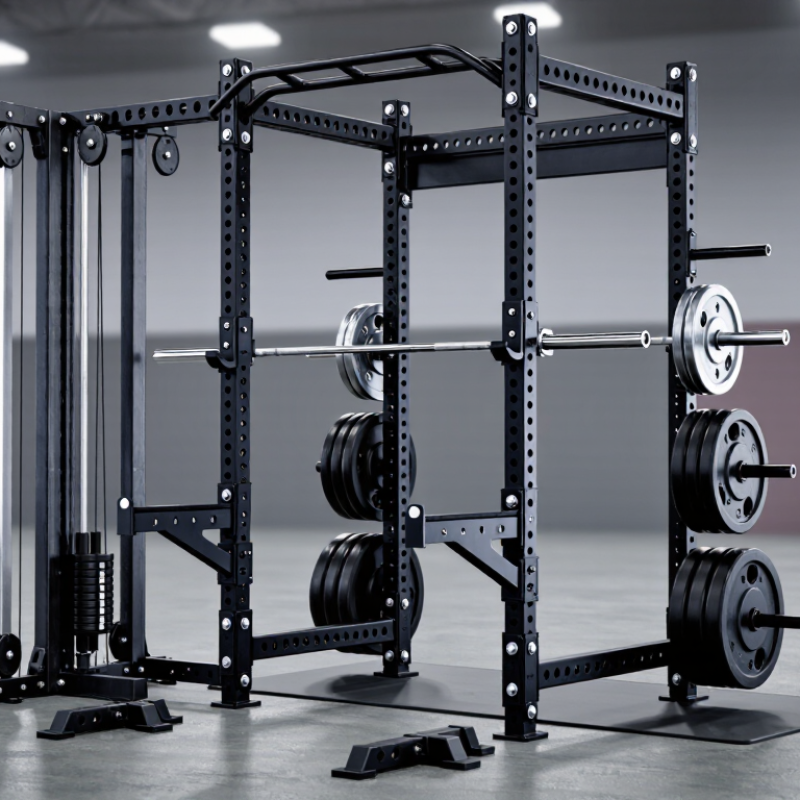
What Are Custom Power Racks and How Do They Work?

Definition and Core Components of Custom Power Racks

Custom power racks are engineered enclosures that distribute, protect, and monitor electricity for high-density equipment. Unlike standard cabinets, they match a site’s voltage, current, footprint, cable paths, and expansion plans. Their core structure usually includes a steel frame, vertical mounting rails, locking panels, grounding points, and protected cable-entry sections.

Inside, the power path begins with an incoming supply and passes through breakers, isolation devices, and distribution units. Busbars or outlet assemblies then feed servers, storage systems, or industrial controls. Monitoring modules measure voltage, current, temperature, and energy use in real time. Some designs also connect to UPS systems and building-management networks. Cooling space matters. A tightly packed rack can create hot spots within minutes. Clear airflow routes are not optional.

The International Energy Agency reported that data centres consumed about 460 TWh of electricity globally in 2022. It projects demand could exceed 1,000 TWh by 2026. This growth makes accurate rack-level measurement more important. Uptime Institute’s Global Data Center Survey has repeatedly identified power problems as a major cause of outages. A custom rack therefore needs correct protection settings, tested grounding, and documented load limits. A neat enclosure can still be poorly designed. That is the uncomfortable part. Field teams should verify actual loads, not trust early estimates. Even a small error in phase balance can reduce resilience, increase heat, and complicate maintenance.

How Custom Power Racks Are Designed and Configured

Custom power racks are engineered enclosures for organizing and distributing electrical power in demanding facilities. Their design begins with the equipment list, expected load, voltage, current, and available floor space. Engineers then select rack dimensions, busbars, power distribution units, breakers, and cable pathways. Every component must fit physically and work electrically.

Configuration also depends on uptime requirements. A basic system may use one incoming feed, while a critical installation may need separate sources, automatic transfer equipment, and monitored circuits. Heat matters too. Dense equipment can create hot zones near the upper rack, so airflow planning and temperature sensors are essential. Clear labeling makes inspections faster and reduces maintenance errors. Real experience shows that small cable-routing decisions can affect future upgrades. This part is often underestimated.

Tips: Leave spare capacity for growth, but avoid oversized components without a reason. Keep heavy cables supported and separated from sensitive data lines. Test alarms, breakers, and backup paths under realistic conditions. Review the layout with an electrical specialist before installation. Do not rely on a drawing alone; inspect the finished rack carefully. A minor clearance problem may become a serious service issue. During commissioning, record readings, connection points, and test results. That documentation supports reliable maintenance and helps teams identify changes later. Even well-planned systems may need revision after the first inspection. Planning is never perfectly final.

The Step-by-Step Operation of a Custom Power Rack

A custom power rack is built around the lifter’s measurements, training goals, and available space. Its uprights, spotter arms, pull-up bar, and storage points can be configured for specific exercises. The design should match the user, not merely look impressive.

The operation begins with a safety inspection. Check every bolt, weld, pin, and floor contact point before loading the bar. Adjust the J-cups so the bar rests near mid-chest height for squats. Set the spotter arms slightly below the lowest point of the movement. They should catch the bar if control is lost. Test the setup with an empty bar first.

For bench pressing, place the bench centrally between the uprights. Lie down, set your shoulder blades, and lift the bar from stable supports. Keep both feet planted while lowering the weight under control. During squats, step beneath the bar, brace your trunk, and walk back only a few controlled steps. Return the bar gently to the cups after each set.

A custom rack can improve training flow, but adjustments require attention. A pin may look secure while sitting only halfway through a hole. That is an easy mistake. I recommend checking both sides before every heavy set. Load plates evenly, keep the lifting area clear, and use a trained spotter when the exercise demands it. No rack replaces sound technique. Personally, I would rather spend another minute adjusting the equipment than rush a poorly fitted setup.

What Are Custom Power Racks and How Do They Work? - The Step-by-Step Operation of a Custom Power Rack

Step Operation Stage What Happens Main Components Involved User Input or Adjustment Practical Result
1 Define the Training Requirements The rack is planned around the user’s exercises, available space, training level, and expected loading needs. Rack frame, layout plan, attachment points, safety zones Select exercises such as squats, presses, pull-ups, or barbell rows and specify preferred rack dimensions. A rack configuration suited to the intended training environment.
2 Position the Rack The rack is placed on a stable, level surface with enough clearance for the barbell, plates, and user movement. Base plates, feet, platform, floor anchors Choose a location with adequate overhead height and side-to-side clearance. Improved stability and sufficient space for safe exercise execution.
3 Secure the Structure The uprights and crossmembers are tightened together. Depending on the design and floor, the base may also be anchored. Vertical uprights, horizontal crossmembers, bolts, washers, anchors Tighten all fasteners according to the equipment instructions and check for movement. A rigid frame that resists unwanted rocking during use.
4 Set the Barbell Height J-hooks or bar supports are inserted into the upright holes at a height that matches the selected exercise. Upright holes, J-hooks, bar supports, locking pins Adjust the supports so the bar can be unracked without excessive reaching or lifting. A controlled starting position for squats, presses, and other barbell movements.
5 Adjust the Safety Supports Safety pins, straps, or adjustable arms are placed below the normal lifting path to catch or support the bar if the user cannot complete a repetition. Safety pins, safety straps, spotter arms, locking mechanisms Set the supports slightly below the lowest safe position of the exercise and verify that they are fully engaged. A secondary protection point that can reduce the distance a loaded bar may fall.
6 Add Custom Attachments Compatible accessories are mounted to expand the rack’s functions beyond basic barbell support. Pull-up bars, dip handles, cable systems, weight storage, landmine units Choose attachments that match the rack’s mounting points and the planned exercises. A multi-purpose training station with greater exercise variety.
7 Load the Barbell Weight plates are placed evenly on both sides of the bar and secured before lifting begins. Barbell, weight plates, collars, J-hooks or supports Use a load appropriate for the user, the exercise, and the rack’s stated capacity. Balanced resistance and reduced risk of plates shifting during the movement.
8 Perform the Exercise The user removes the bar from its supports, completes the movement inside the rack, and returns the bar to the supports after the set. Barbell, rack uprights, J-hooks, safety supports, attachments Maintain controlled technique, keep the bar path clear, and avoid exceeding the equipment’s capacity. The rack provides positioning, support, and a defined lifting area.
9 Re-Rack and Unload After the set, the bar is placed securely on the supports before plates are removed in a controlled manner. J-hooks, bar supports, collars, plate storage posts Confirm the bar is stable, then remove plates evenly from both sides. Reduced chance of sudden imbalance or bar movement.
10 Inspect and Maintain The frame, fasteners, hooks, pins, welds, and attachments are checked regularly for looseness, damage, or excessive wear. Bolts, welds, safety hardware, adjustment holes, protective coating Retighten approved fasteners, clean contact surfaces, and replace damaged parts before further use. Reliable operation and longer service life when maintenance is performed consistently.
Important: Exact dimensions, adjustment-hole spacing, attachment compatibility, and maximum load vary by custom design. Always follow the rack’s engineering specifications and operating instructions.

Safety Features and User Protection Mechanisms

Custom power racks are built around the user, the available space, and the intended training movements. Their safety begins with accurate dimensions. Upright height, hole spacing, and base width should match the lifter’s reach and equipment. Small details matter. Adjustable J-cups hold the bar at a stable height, while safety pins or straps catch the bar during a failed lift. These supports must lock fully into place, not simply rest inside the frame.

A well-designed rack also uses reinforced joints, non-slip feet, and clearly marked load ratings. Spotter arms can provide extra protection during squats and presses, especially when training alone. A power rack should not shift when a loaded bar contacts the safeties. That gap matters. Users should test the setup with an unloaded bar before adding weight. Check the pins, bolts, welds, and floor contact regularly. A small crack or loose fastener can change the rack’s behavior.

In practical use, protection depends on both engineering and habits. Keep hands clear when adjusting attachments. Center the bar before lifting. Do not exceed the stated capacity, even if the steel looks strong. Human judgment remains essential. A safety system may reduce injury risk, but it cannot correct poor positioning or rushed decisions. I would also question overly complex customization. More attachments can improve function, yet they may create more points for confusion, wear, and incorrect setup.

Common Applications and Customization Options

What Are Custom Power Racks and How Do They Work?

A custom power rack is a modular steel training frame built around adjustable uprights, crossmembers, J-cups, and safety arms. It holds a barbell during squats, presses, and pulls. The safety arms catch the bar if a lift fails. That detail matters more than appearance. Rack depth, steel thickness, hole spacing, and rated load should match the user’s training level and available floor space.

Common applications include home garages, commercial gyms, school strength rooms, and rehabilitation facilities. A compact rack may use a short footprint and wall-mounted storage. A larger facility may need multiple stations, cable attachments, dip handles, pull-up bars, weight pegs, and landmine mounts. According to ACSM’s 2025 Worldwide Survey of Fitness Trends, traditional strength training ranked fifth among global fitness trends. That ranking supports continued demand for adaptable resistance-training equipment. WHO’s 2022 Global Status Report on Physical Activity also estimated that 31% of adults worldwide do not meet recommended activity levels, creating a practical need for accessible training setups.

Customization should begin with workflow, not decoration. A garage user may prioritize folding uprights and rubber flooring. A coaching facility may need wider walkways, numbered holes, and quick-adjust safeties. In my experience, buyers often underestimate ceiling height and plate-storage clearance. That mistake becomes expensive. Cable systems add versatility, but they also increase maintenance points and installation complexity. A custom rack works best when its dimensions, attachments, anchoring method, and user capacity are documented before fabrication.

FAQS

What is a custom power rack?

It is a modular steel frame for squats, presses, and pulls. Adjustable uprights, J-cups, and safety supports hold the bar securely. Its dimensions should match the user, equipment, and training space.

Which safety features matter most?

Fully locking J-cups, safety pins, and safety straps are essential. Reinforced joints, non-slip feet, and visible load ratings add protection. Spotter arms can help during solo training.

How should users test a new rack?

Test the setup with an unloaded bar before adding weight. Check the pins, bolts, welds, and floor contact. Test it empty. The rack should not shift when the bar touches the safeties.

Why are accurate measurements important?

Upright height should match the lifter’s reach. Hole spacing affects bar placement and safety adjustment. Base width and rack depth must fit the available floor area.

Where can custom power racks be used?

They can suit home garages, commercial gyms, school rooms, and rehabilitation facilities. A garage may need folding uprights and rubber flooring. A larger facility may require wider walkways and several training stations.

What attachments can be added?

Options may include pull-up bars, dip handles, cable systems, weight pegs, and landmine mounts. Each attachment adds function. It may also create another maintenance or setup point.

What should buyers consider before customization?

Start with training workflow instead of appearance. Record dimensions, attachments, anchoring methods, and user capacity before fabrication. Ceiling height and plate-storage clearance are easy to underestimate.

Can a safety system prevent every injury?

No. Safety equipment can reduce risk, but it cannot fix poor positioning or rushed decisions. Keep hands clear during adjustments and center the bar before lifting. I would also question overly complex designs. More features are not always better.

Conclusion

Custom Power Racks are specialized strength-training structures designed to support safe, efficient, and adaptable workouts. They typically include upright posts, adjustable safety bars, J-hooks, lifting platforms, pull-up stations, and attachment points for additional equipment. Unlike standard racks, custom models can be configured according to a user’s space, training goals, preferred height, weight capacity, and exercise selection. The design process usually involves choosing dimensions, materials, accessories, storage options, and layout features before the rack is assembled and secured.

During operation, the user positions the barbell at the desired height, performs the exercise inside the rack, and relies on the safety bars or straps to limit the bar’s movement if control is lost. Protective features such as reinforced frames, stable bases, locking mechanisms, and adjustable supports help reduce injury risks when used correctly. Custom Power Racks are suitable for home gyms, training facilities, rehabilitation environments, and group fitness spaces, with options for squats, presses, pull-ups, resistance training, and organized equipment storage.


Oliver

Oliver

Oliver is a professional marketing specialist who helps customers understand the products, services, and expertise behind our company. With in-depth knowledge of our product range and a strong understanding of customer needs, he turns complex information into clear, practical guidance. He regularly......