0%

Global sourcing is no longer judged by purchase price alone. Delivery speed, warehouse adaptability, and recovery capacity now influence every sourcing decision. McKinsey Global Institute reports that companies can expect supply chain disruptions lasting one month or longer every 3.7 years. That frequency changes the role of storage equipment.

Commercial Flex Racks offer a practical response. Their adjustable layouts can support cartons, pallets, spare parts, and seasonal inventory within the same facility. A buyer may begin with a compact configuration, then add bays as demand grows. In a busy warehouse, that flexibility can reduce awkward aisle changes, duplicated handling, and wasted floor space. Small details matter. A bolt, beam, or label can affect installation time.

MHI’s 2024 Annual Industry Report highlights the growing importance of automation, digital visibility, and resilient operations. Commercial Flex Racks do not solve every sourcing problem. They cannot replace accurate forecasts or dependable suppliers. That limitation deserves attention. Still, they can create a stronger physical foundation for international procurement.

John Paxton, former CEO of MHI, described the supply chain as “the backbone of our economy.” His observation fits global sourcing closely. When inventory crosses borders, storage systems must absorb uncertainty without creating unnecessary complexity. Commercial Flex Racks can support that goal through modular design, easier reconfiguration, and more efficient space use. The better question is not whether racks are flexible. It is whether the chosen system remains useful when products, volumes, and markets change.
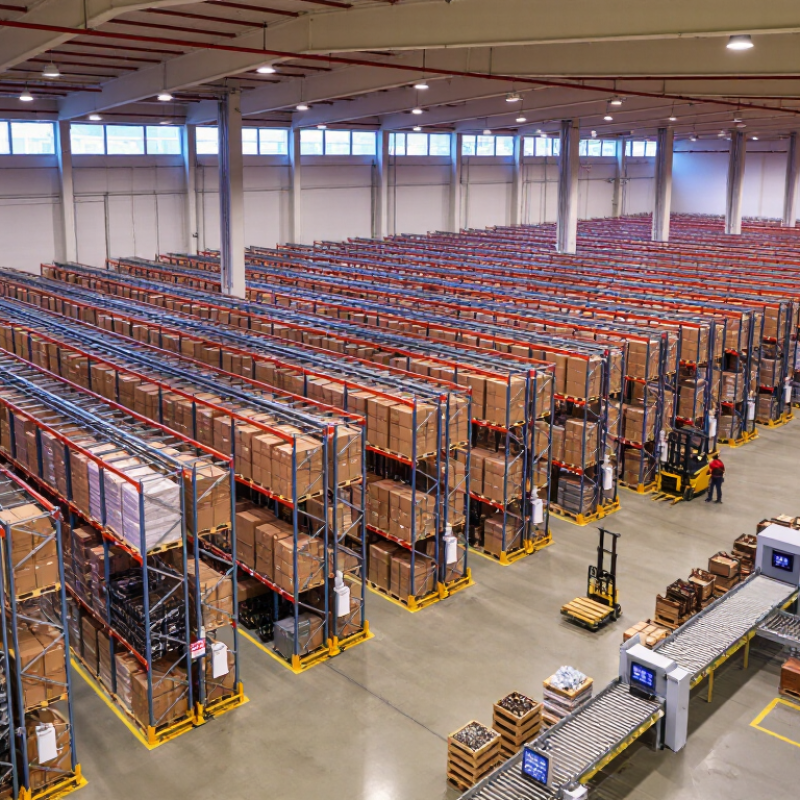
Why Choose Commercial Flex Racks for Global Sourcing?

What Are Commercial Flex Racks and How Do They Work?

Commercial flex racks are modular storage systems with uprights, adjustable beams, decks, and connectors. Their layout can change when carton sizes, pallet weights, or inventory volumes shift. A forklift loads pallets onto the beams, while operators adjust beam levels with locking pins or fasteners. Wire decking or solid panels spread the load across each bay.

The design is practical for global sourcing. A buyer can specify beam lengths, frame heights, coatings, and load ratings for different warehouses. Knock-down shipping also reduces container volume. Grand View Research valued the global warehouse racking market at about USD 9.67 billion in 2023, reflecting continuing demand for organized storage. However, “flexible” does not mean unlimited. Every configuration needs an engineer-approved load chart, level flooring, and visible inspection points.

MHI’s 2024 Annual Industry Report found that 83% of supply chain professionals consider innovation important to future competitiveness. Flex racks support that goal by allowing faster layout changes without rebuilding an entire storage area. In practice, a warehouse may move beams upward for tall cases, then lower them during a seasonal surge. Small errors remain possible. An overloaded deck, missing safety pin, or uneven frame can create serious risk. Sourcing teams should request test certificates, dimensional drawings, corrosion data, and installation guidance before comparing prices. Lowest cost is not always lowest total cost.

Which Industries and Storage Needs Use Commercial Flex Racks?

Commercial flex racks suit industries where inventory changes faster than floor plans. E-commerce warehouses, third-party logistics, retail distribution, automotive parts, and light manufacturing often face this pressure. The U.S. Census Bureau reported that e-commerce sales reached about $1.19 trillion in 2024, representing 16.1% of total retail sales. That volume creates uneven demand, seasonal peaks, and frequent SKU changes.

Flex racks help teams adjust beam levels, aisle layouts, and storage zones without rebuilding the entire system. They can support cartons, totes, pallets, and mixed-size components. In my warehouse experience, this flexibility reduces wasted vertical space and makes replenishment routes easier to revise. The MHI 2024 Annual Industry Report found that 55% of supply chain professionals already use artificial intelligence. Better data is useful, but adaptable physical storage still matters. Software cannot fix a rack layout that no longer fits.

Tips: Match rack depth to the actual load, not the biggest possible carton. Leave safe clearance around sprinklers and equipment. Review turnover data before adding levels. A highly adjustable rack may cost more initially. That trade-off can be worthwhile, although not always. The honest test is simple: can workers locate, handle, and replenish products without awkward movement? Warehouses serving food packaging, spare parts, or promotional goods should reassess layouts after every major demand shift. Industry reports provide direction, but site measurements reveal the less comfortable truth.

Commercial flex racks are commonly selected when storage systems must accommodate different pallet footprints across industries. The dimensions shown are representative standardized pallet formats: 1200 × 800 mm for European pallets, 1219 × 1016 mm for North American general-purpose pallets, 1200 × 1000 mm for industrial applications, and 1200 × 1200 mm for drum and bulk-container handling. Actual rack dimensions should be verified against load weight, aisle width, handling equipment, and local safety requirements.

How Do Flex Racks Support Efficient Global Sourcing?

Global sourcing rarely follows a stable rhythm. Supplier changes, port delays, and seasonal demand can reshape warehouse needs within weeks. Commercial flex racks provide adjustable bays, removable levels, and collapsible frames for changing product flows. A team can widen one bay for cartons, then reconfigure it for palletized components. That physical flexibility matters when buying from several regions with different packaging standards.

The WTO’s Global Trade Outlook and Statistics, April 2024, reported a 1.2% decline in world merchandise trade volume during 2023. It projected 2.6% growth for 2024, showing how quickly planning assumptions can shift. Flex racks help sourcing teams stage incoming goods without permanently assigning space to one supplier or SKU. Clear labels, separated batches, and visible inspection zones also support traceability during receiving. These details reduce mixed inventory and make supplier comparisons more reliable.

MHI’s 2024 Annual Industry Report reported that 55% of respondents planned to increase supply-chain technology investment. Racks cannot replace forecasting software, but they improve the physical data behind it. Barcode locations, load ratings, and measured cube use create evidence for replenishment decisions. Start with a small pilot. Poor slotting can still create wasted travel and unsafe handling, especially when imported cartons vary in weight. Flexibility needs disciplined operating rules.

What Factors Should Buyers Compare Before Selecting Flex Racks?

Choosing commercial flex racks for global sourcing requires more than comparing unit prices. Buyers should examine load capacity, rack dimensions, fabric strength, and frame construction. A warehouse handling dense cartons needs different support than one storing lightweight bags. Measure aisle widths and pallet access carefully. Small errors matter.

Ask suppliers for test reports, material specifications, and documented quality procedures. Check stitching, welds, corrosion protection, and the stability of loaded racks. Safety ratings should match the actual working environment, not only a sales sheet. Local inspection can reveal uneven frames or weak seams before shipment. It costs more, but replacement costs can be higher.

Shipping efficiency is another practical factor. Foldable racks may reduce container volume, yet buyers should calculate assembly labor and storage space after arrival. Compare minimum order quantities, lead times, spare-part availability, and warranty terms. A lower quotation may hide inspection, duty, or port-handling expenses. Request a complete landed-cost estimate.

Supplier experience deserves careful review. Ask for production samples, factory audit evidence, and references from similar warehouse projects. Communication quality also affects sourcing reliability. Time-zone delays can become operational problems. Flex racks are not automatically the best choice; poor loading discipline can reduce their service life. I would test a small batch first, record failures, and revise the specification before placing a larger order.

How Are Commercial Flex Racks Procured, Shipped, and Managed Globally?

Commercial flex racks are procured through a controlled sourcing process, not a single purchase order. Buyers usually define load capacity, rack dimensions, material thickness, surface finish, and required certifications. A detailed request for quotation helps suppliers price accurately across different regions. Samples or pilot units can reveal problems with welds, caster movement, or unstable joints before volume production begins.

Global shipping requires careful planning. Foldable or modular racks can reduce container volume, but packaging still needs corner protection and moisture control. Export documents, packing lists, product codes, and delivery terms should match the physical shipment. Before dispatch, experienced teams inspect quantities, measure cartons, and photograph loaded pallets. Small errors matter. One missing component can delay an entire installation.

After arrival, management continues through inventory tracking and scheduled inspections. A shared system can record rack locations, repair history, load limits, and replacement parts. Regional warehouses may shorten delivery times, while standardized components simplify maintenance across countries. However, centralized purchasing is not always efficient. Local storage costs, port congestion, currency changes, and varying workplace requirements can affect the original plan. We still need to question forecast accuracy. A rack that looks economical on paper may become expensive when handling, storage, and rework are included.

FAQS

How do flex racks support global sourcing?

Flex racks adjust to changing suppliers, packaging formats, and seasonal demand. Teams can widen bays for cartons or palletized components. This reduces permanent space commitments.

How do flex racks help during receiving?

Clear labels and separated batches make incoming goods easier to trace. Visible inspection zones help teams identify damage or quality issues. Small details matter.

Can flex racks improve inventory decisions?

They provide physical data for replenishment planning. Barcode locations, load ratings, and measured space usage create useful evidence. Racks cannot replace forecasting software.

What should buyers check before selecting flex racks?

Compare load capacity, dimensions, fabric strength, and frame construction. Match the rack to the goods’ weight and shape. Lightweight bags need different support than dense cartons.

Why should warehouse measurements be taken carefully?

A few centimeters can affect aisle access, pallet movement, and safe handling. Measure aisle widths and turning areas before ordering. Small errors become expensive.

Which supplier documents should buyers request?

Request material specifications, test reports, and documented quality procedures. Ask for samples, factory audit evidence, and similar project references. Paperwork is not proof by itself.

How should buyers calculate the real purchase cost?

Include assembly labor, container space, inspection, duties, and port-handling charges. Also compare minimum order quantities, lead times, spare parts, and warranty terms. A low quotation may mislead.

Is a small pilot batch necessary?

A pilot can reveal weak seams, uneven frames, poor slotting, or unsafe loading habits. Record failures and revise the specification before expanding. I would test before trusting.

Conclusion

Commercial Flex Racks are adaptable storage systems designed to organize, protect, and move goods efficiently across different supply chain environments. Their flexible structure can support various product sizes, packaging formats, and handling requirements, making them suitable for industries such as manufacturing, retail, agriculture, logistics, and industrial distribution. By improving space utilization, simplifying loading and unloading, and supporting reusable transport operations, these racks can help companies manage changing inventory needs while reducing unnecessary handling.

For global sourcing, buyers should compare load capacity, dimensions, materials, durability, foldability, safety features, maintenance needs, and compatibility with warehouses and transport equipment. Procurement planning should also consider customization, production timelines, quality inspections, packaging, shipping methods, import documentation, and total landed cost. With clear specifications and supplier coordination, Commercial Flex Racks can be sourced, shipped, tracked, and managed more consistently across international supply chains, supporting reliable operations and better long-term storage efficiency.


Amelia

Amelia

Amelia is a dedicated marketing professional with a deep understanding of her company’s products, services, and the needs they are designed to address. She regularly contributes expert articles to the company website, sharing clear, practical insights that help readers understand product features,......