0%

China’s best Golf Performance Centers manufacturers are reshaping how players train, recover, and understand their physical potential. Their facilities combine launch monitors, force plates, motion-capture systems, strength equipment, and customized coaching spaces. A well-designed center should feel practical, not theatrical. Every screen, mat, and training tool must support a clear performance goal.

Dr. Greg Rose, co-founder of the Titleist Performance Institute, has said, “The body is the engine of the golf swing.” This principle explains why modern Golf Performance Centers need more than advanced simulators. They must connect movement assessments with club data, mobility work, physical conditioning, and measurable progress. Experienced manufacturers understand this connection. They design layouts that help coaches observe a player’s balance, rotation, speed, and recovery between sessions.

China-based suppliers can offer strong manufacturing capacity, flexible customization, and competitive project coordination. Some provide complete solutions, from structural planning to equipment integration and installation support. However, quality is not guaranteed by appearance alone. A polished showroom can still hide weak calibration, poor after-sales service, or limited technical training. That matters.

Reliable buyers should examine material durability, software compatibility, safety design, maintenance response, and real installation results. They should also ask whether the equipment serves beginners, professionals, junior players, and rehabilitation clients equally well. No single factory fits every project. That is the difficult part.

The strongest manufacturers listen before they propose. They study the facility’s space, coaching model, budget, and local market. Their best work turns technology into useful daily practice. Not just impressive hardware.
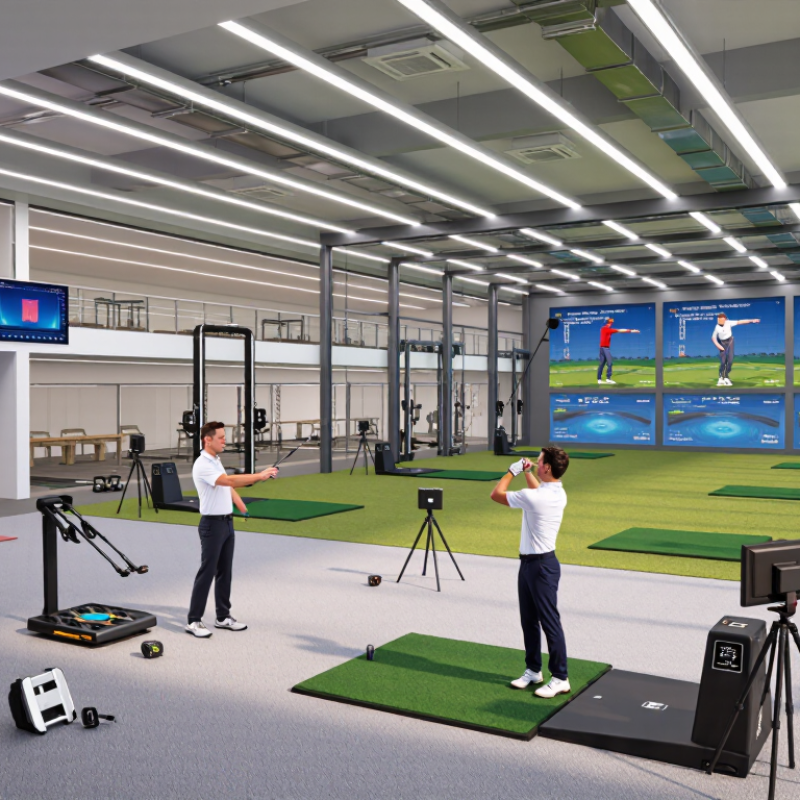
China Best Golf Performance Centers Manufacturers

What Defines a Golf Performance Center Manufacturer in China

China Best Golf Performance Centers Manufacturers

A golf performance center manufacturer in China is more than a workshop producing nets, mats, and simulators. It is an engineering partner that understands how golfers train, move, measure, and improve. Strong manufacturers combine metal fabrication, impact-surface design, sports flooring, lighting control, and digital integration. They should explain material choices clearly.

Experience appears in small details: anti-glare screens, stable ball-flight data, quiet hitting bays, and reliable drainage outdoors. A credible supplier shares drawings, load calculations, sample reports, and maintenance guidance. Professional teams test repeated impacts, humidity, ultraviolet exposure, and temperature changes before shipment. Independent inspections and traceable quality records add confidence.

A capable China-based manufacturer also adapts production to site conditions. Ceiling height, bay spacing, ventilation, flooring levels, and local climate can affect the final result. The supplier should coordinate with architects, installers, and technology teams instead of treating equipment as isolated products. Customization must remain controlled. Each revision needs written specifications and measurable acceptance standards.

No factory gets every detail right on the first attempt. That matters. I would question any supplier promising perfect performance without field evidence. Responsive sampling, honest lead times, and corrective action reveal practical reliability. A dependable manufacturer welcomes installation feedback and improves the next production run. This humility often separates a performance center manufacturer from a simple equipment seller.

Core Products and Technologies for Golf Performance Centers

China Best Golf Performance Centers Manufacturers

Golf performance centers depend on accurate products, not attractive rooms alone. Leading manufacturers develop launch monitors using radar, camera systems, or both. These tools measure ball speed, launch angle, spin, carry distance, and club delivery. Reliable models should perform consistently under different lighting and indoor conditions.

Impact screens, hitting mats, and artificial turf also shape the training experience. High-density screens need clear image projection and safe energy absorption. Quality mats should support stable footing without hiding poor contact. Many centers add force plates, motion sensors, and high-speed cameras for deeper biomechanical analysis. These systems help coaches compare swing changes with measurable results.

Good technology still needs disciplined installation and maintenance. Technicians should calibrate sensors, check alignment, and test readings against known conditions. Small errors can affect club fitting decisions. Data can mislead. Software should present useful patterns, not overwhelm players with numbers. Manufacturers with practical testing experience often provide stronger training, clearer documentation, and responsive technical support. No facility is perfect. A thoughtful manufacturer admits limitations and improves products through coach feedback, equipment testing, and regular field observation.

How Chinese Manufacturers Design and Build Performance Facilities

China’s golf performance centers are moving beyond simple driving ranges. The strongest facilities combine coaching, biomechanics, club fitting, fitness, and data analysis in one controlled environment. The R&A’s Golf Around the World 2023 report recorded more than 41,000 golf facilities worldwide. That scale shows growing demand for measurable practice, not only recreational play.

Chinese manufacturers usually begin with site conditions. Southern projects need humidity control, drainage, and corrosion-resistant steel. Northern facilities need insulation and stable indoor temperatures. Designers then map ceiling height, hitting-bay spacing, lighting, acoustic panels, and camera positions. A reliable build should separate ball-flight areas from strength-training zones. It should also provide clear maintenance access behind screens and sensors. In practice, some projects overpack technology and underdesign player circulation. That mistake remains common.

Tips: Specify testing standards before equipment selection. Check calibration access, floor vibration, ventilation, and data privacy. Request a full-scale sample bay before production. Measure sound levels during peak use, not during an empty demonstration. The International Health, Racquet & Sportsclub Association reports that fitness facilities increasingly use connected assessment tools, yet hardware alone does not improve coaching. Human interpretation still matters. Manufacturers should document materials, tolerances, electrical loads, and replacement cycles. Independent inspections can expose weak assumptions early. The design may look impressive, but daily reliability decides its value.

China Golf Performance Facility Design: Indicative Space Allocation

A practical planning benchmark for manufacturers and builders designing integrated golf performance centers. The allocation prioritizes swing analysis, short-game development, physical conditioning, and technical support areas.

Indicative planning benchmark shown as a normalized percentage of usable facility area; actual proportions vary according to site size, customer profile, climate, and operating model.

Quality Standards, Customization, and Project Support

China’s best golf performance center manufacturers should prove quality through measurable standards, not attractive renderings. Experienced buyers inspect steel thickness, turf density, impact-net strength, lighting uniformity, and drainage design. Each material should have test records and clear maintenance requirements. Safety also matters. Electrical systems, fire protection, access routes, and structural loads must follow applicable local codes.

Customization should begin with the site, not a fixed catalogue. A narrow urban room needs different bay spacing than a large outdoor facility. Manufacturers can adjust ceiling height, hitting direction, acoustic treatment, climate control, and ball-tracking equipment. Left-handed players need practical clearance. Coaches may require recording zones and secure storage. Small details matter.

Project support often separates a capable supplier from an unreliable one. Request detailed drawings, material samples, installation guidance, commissioning checks, and staff training. Spare parts and response times should be written into the agreement. A factory visit or video inspection can reveal production discipline. Still, no supplier is perfect. A polished sample may hide installation weaknesses. One useful improvement is independent inspection before shipment, followed by site testing after installation. Clear records build trust.

How to Choose the Right Chinese Golf Performance Center Manufacturer

Choosing the right Chinese golf performance center manufacturer requires more than comparing catalog prices. Review its experience with indoor golf rooms, outdoor hitting bays, putting areas, and athlete testing spaces. Ask for project photos, material samples, and detailed production drawings. A polished showroom can mislead.

Check how the manufacturer tests launch monitors, force plates, turf systems, lighting, and protective screens. Request inspection records and evidence of compliance with relevant electrical and safety standards. Confirm whether engineers review ceiling height, ball speed, drainage, ventilation, and local installation conditions. Technical advice should be specific, not decorative.

Visit the factory when possible, or request a live video inspection. Speak with previous buyers about delivery accuracy, installation support, replacement parts, and response times. Clear contracts should define tolerances, packaging, warranty limits, and testing procedures. Do not choose the lowest quote automatically. Cheap turf may wear unevenly within months. My own mistake was judging quality from samples alone; the backing and adhesive mattered more on site. No manufacturer gets every detail right. Choose one that documents problems, accepts corrections, and explains realistic lead times. A dependable partner protects performance long after the first shipment.

China Best Golf Performance Centers Manufacturers - How to Choose the Right Chinese Golf Performance Center Manufacturer
Evaluation Dimension What to Assess Reliable Evidence or Benchmark Suggested Weight Potential Warning Signs
Product Scope Whether the manufacturer can supply a complete golf performance center rather than isolated equipment. Capability to coordinate hitting bays, launch monitors, impact screens, projectors, flooring, software, lighting, and installation accessories. 12% Only one product category is offered, or system compatibility is not clearly documented.
Technical Accuracy Measurement consistency for ball speed, club speed, launch angle, spin, carry distance, and shot direction. Published technical specifications, repeatability test records, calibration procedures, and sample measurement reports. 18% Unverified accuracy claims, missing calibration instructions, or inconsistent results during a live demonstration.
Software Compatibility Support for practice, coaching, club fitting, competitions, and third-party integration where required. Clear operating-system requirements, documented APIs or connection methods, update policy, language options, and user-access controls. 12% Mandatory software subscriptions are not disclosed, or the system cannot export or manage customer data appropriately.
Customization Capability Ability to adapt the center to the available room, target market, climate, and operating model. Custom bay dimensions, enclosure layouts, screen sizes, flooring options, lighting plans, control panels, and multi-language interfaces. 10% Only fixed-size packages are available, with no engineering drawings or site-specific recommendations.
Manufacturing Quality Material selection, assembly quality, electrical safety, impact resistance, and long-term durability. Material specifications, production inspection records, batch traceability, incoming-material checks, and pre-shipment testing. 14% Unclear material grades, visible assembly defects, inconsistent finishing, or no formal quality-control process.
Safety and Compliance Electrical, electromagnetic, fire, structural, and indoor-use requirements for the destination market. Applicable test reports and conformity documents for the destination country, plus installation and safety instructions. 10% Documents are copied, expired, unrelated to the offered configuration, or unavailable for review before purchase.
Installation Support Planning, delivery coordination, assembly, system calibration, staff training, and handover procedures. Detailed installation drawings, remote or on-site commissioning options, training materials, and a documented acceptance checklist. 8% Installation responsibility is unclear, or the buyer must independently configure and calibrate the whole system.
Production and Delivery Capacity to meet the required quantity and delivery schedule without sacrificing quality. Typical production lead time of approximately 20–60 working days for customized systems, subject to configuration, quantity, and testing requirements. 8% Lead times are guaranteed without reviewing drawings, specifications, payment terms, or production capacity.
Warranty and Service Coverage for hardware, software, replacement parts, technical support, and response times. A written warranty with clearly defined exclusions; many commercial systems offer approximately 12–24 months of standard hardware coverage, depending on configuration. 10% Warranty terms are verbal only, consumable parts are excluded without notice, or support is unavailable in the buyer’s time zone.
Spare Parts Availability Availability of replacement sensors, cables, projectors, screens, mats, lighting components, and control devices. Spare-parts list, recommended stock levels, replacement pricing, service life information, and documented part-number management. 6% Critical components are proprietary with no replacement plan or have long and undefined replenishment times.
Export and Documentation Experience with international packaging, shipping, customs documents, and destination-market requirements. Professional commercial invoices, packing lists, installation manuals, wiring diagrams, product datasheets, and export packaging procedures. 5% Incomplete documents, unsuitable packaging for heavy or fragile equipment, or no clear responsibility for shipping damage.
Commercial Transparency Total cost of ownership, including equipment, software, installation, freight, taxes, training, maintenance, and renewals. Itemized quotation with model numbers, quantities, unit prices, software fees, delivery terms, payment schedule, and acceptance criteria. 5% Low initial pricing hides recurring fees, missing accessories, limited software functions, or expensive replacement parts.
Verification Process Whether the supplier can prove performance before full-scale production or payment. Factory audit, reference installations, video or in-person demonstrations, pre-production samples, third-party inspection, and signed technical specifications. 5% Refusal to provide samples, inspections, technical drawings, performance tests, or verifiable project references.

FAQS

What defines a reliable golf performance center manufacturer in China?

A reliable manufacturer combines engineering, fabrication, sports flooring, lighting, and digital integration. It understands how golfers train, measure, and improve. Details matter. The supplier should explain materials clearly and provide drawings, load calculations, and maintenance guidance.

Which products are important in a golf performance center?

Core products include launch monitors, impact screens, hitting mats, artificial turf, force plates, motion sensors, and high-speed cameras. These products should support accurate training data and stable player movement. Attractive rooms alone are not enough.

How can launch monitor accuracy be evaluated?

Ask how the system measures ball speed, launch angle, spin, carry distance, and club delivery. Testing should cover different lighting and indoor conditions. Technicians should calibrate sensors and check alignment regularly. Data can mislead.

What should buyers inspect in impact screens and hitting mats?

Impact screens should provide clear projection and safe energy absorption. Hitting mats need dense, stable surfaces that support consistent footing. Inspect screen strength, mat thickness, surface wear, and maintenance needs. Small flaws become obvious after repeated impacts.

How should a manufacturer customize a performance center?

Customization should begin with the site, not a fixed catalogue. Ceiling height, bay spacing, ventilation, flooring levels, and climate affect the design. Left-handed players need sufficient clearance. Coaches may need recording areas and secure storage.

What quality records should a manufacturer provide?

Request material samples, test reports, structural calculations, and traceable inspection records. Check steel thickness, turf density, lighting uniformity, drainage, and impact-net strength. Independent inspection before shipment adds confidence. It is not excessive.

What project support should buyers expect?

A capable supplier should provide detailed drawings, installation guidance, commissioning checks, and staff training. Spare parts and technical response times should appear in writing. Site testing after installation is valuable. Installation problems may not appear in a polished sample.

How can buyers judge a manufacturer’s practical reliability?

Review sampling speed, lead-time accuracy, field feedback, and corrective actions. Ask whether the supplier tests humidity, ultraviolet exposure, temperature changes, and repeated impacts. No factory gets everything right initially. Honest limitations are more convincing than perfect promises.

Conclusion

China’s golf performance center manufacturers combine engineering, sports technology, facility planning, and project management to create complete training environments. Their core offerings may include launch monitors, swing analysis systems, putting and chipping areas, indoor simulators, impact protection, artificial turf, lighting, and integrated data platforms. By coordinating these elements, manufacturers can design Golf Performance Centers for professional athletes, academies, resorts, clubs, and commercial training venues.

A reliable manufacturer should provide more than individual products. It should understand site conditions, optimize space and workflow, support customized layouts, and manage installation, testing, staff training, and after-sales service. Buyers should evaluate product accuracy, material durability, safety compliance, software compatibility, production capacity, communication efficiency, and experience with similar projects. Clear technical documentation, transparent quotations, realistic delivery schedules, and dependable long-term support are essential factors when selecting a Chinese manufacturing partner.


Charlotte

Charlotte

Charlotte is a professional marketing specialist with a strong understanding of the company’s products and the needs of the people who use them. She regularly contributes expert articles to the company website, sharing clear, practical information that helps readers compare options, understand......